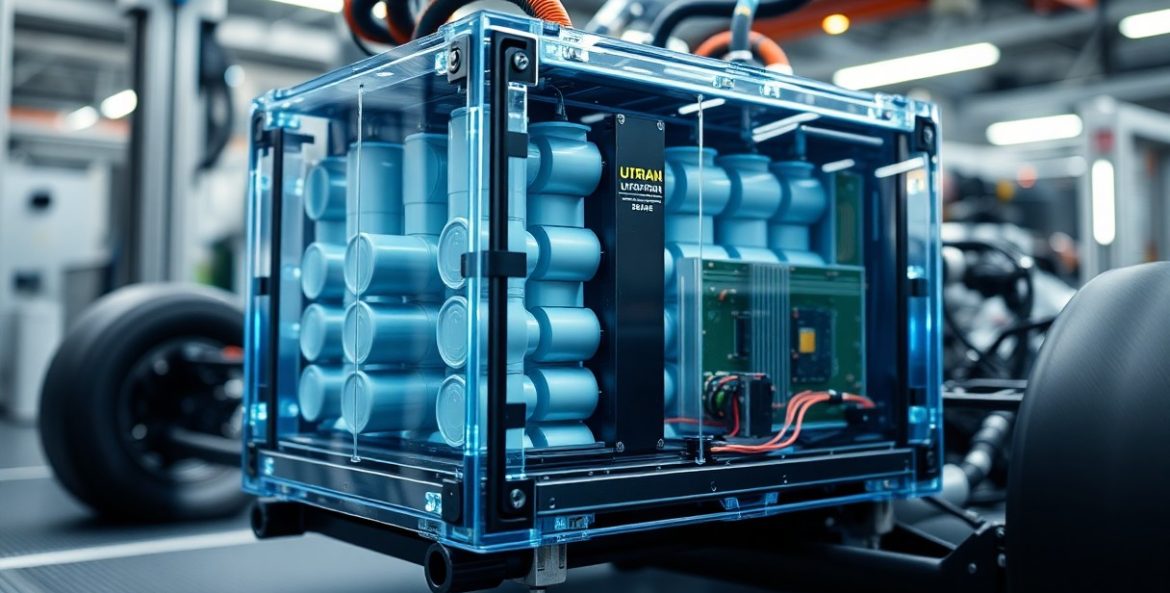
Mobility shifts depend on advances in lithium batteries; you must weigh rapidly improving energy density and lower costs against persistent thermal runaway and supply-chain hazards. As you plan for vehicles and fleets, expect longer range, faster charging, and more recyclable chemistries to reshape your options while policy and materials science determine deployment timelines.
Types of Lithium Battery Technologies
Among the options shaping vehicle platforms today you will find a mix of legacy and emerging chemistries that each trade off energy density, safety, cost and manufacturability. OEMs and fleet operators commonly compare cell-level metrics (Wh/kg, Wh/L, cycle life) and system-level impacts such as cooling requirements and pack volumetrics when choosing between lithium-ion variants, solid-state prototypes, and lithium-metal concepts.
| Technology | Key characteristics |
| Li-ion (NMC / NCA) | High gravimetric energy density (typically 150-260 Wh/kg), widespread automotive use, mature supply chain, requires active thermal management; examples include many BEVs and hybrid packs. |
| Li-ion (LFP) | Lower nominal energy density (100-160 Wh/kg) but excellent calendar life and thermal stability, lower cost and cobalt-free chemistry favored in buses and value EV segments. |
| Solid-state | Potential for >300 Wh/kg and use of lithium metal anodes, improved intrinsic safety (non-flammable electrolyte) but faces interface, manufacturing and scaling challenges. |
| Lithium-metal / Li-S advances | Targets extreme gravimetric energy (theoretical >400 Wh/kg for Li-S) yet currently limited by cycle life, polysulfide shuttle and industrial readiness; attractive for aerospace and long-range niche mobility. |
- Energy density and pack architecture directly determine vehicle range and weight.
- Thermal runaway remains the principal safety risk in high-energy liquid-electrolyte cells.
- Manufacturing scale and supply of critical metals (nickel, cobalt, lithium) shape cost curves and sourcing strategies.
Lithium-ion Batteries
You should treat contemporary lithium-ion batteries as a family rather than a single product: NMC and NCA variants prioritize energy density (150-260 Wh/kg) and power for long-range BEVs, whereas LFP offers superior thermal stability and calendar life at lower cost and energy density (≈100-160 Wh/kg). For example, many high-volume EVs use NMC formulations to hit 300-400 km real-world range per pack, while bus fleets increasingly select LFP for predictable lifecycle economics and reduced fire risk.
Your considerations will include typical cycle life (often 1,000-2,000 cycles for automotive packs depending on depth of discharge and temperature), charge-rate capability (1C-3C practical range for many cells), and system-level trade-offs: higher energy density saves mass but raises pack-level thermal management complexity and the chance of thermal runaway if cells are abused or damaged.
Solid-state Batteries
You encounter solid-state concepts promising a step-change: using a solid electrolyte and often a lithium-metal anode, developers aim for cell-level energy densities exceeding 300 Wh/kg and faster charging without the flammability of liquid electrolytes. Industry reports and prototypes (several suppliers claim single-cell demonstrations >350-400 Wh/kg) suggest potential vehicle range increases of 20-40% at the same pack mass, but these claims depend on overcoming interfacial resistance and maintaining cycle life under automotive conditions.
Your deployment timeline should account for engineering hurdles: scaling stack fabrication, ensuring stable electrode-electrolyte interfaces at elevated temperatures, and validating mechanical resilience under vibration. Companies such as established OEM groups and startups are running pilot packs; Toyota and other OEMs have active programs targeting limited production in the mid-to-late 2020s, though mass adoption requires process yields and cost per kWh competitive with advanced lithium-ion.
Additional technical attention centers on dendrite suppression and manufacturing yield-while solid electrolytes reduce the risk of combustion compared with liquid cells (a major positive), they can still suffer from cell shorts if lithium-metal morphology is not properly controlled, which underscores that safety gains are substantial but not absolute. Perceiving these timelines and technical trade-offs, you should monitor validated cell data (cycle life at relevant temperatures, demonstrated charge rates, and scaled pilot yields) before committing to supplier qualification.
Factors Influencing Battery Performance
Ambient conditions, cell formulation, and how you operate the pack all translate directly into range, power and longevity. For example, running cells consistently above 40°C can double the rate of capacity fade (Arrhenius rule: roughly a 2× increase per +10°C in reaction rate), while exposing cells to sustained subzero temperatures can cut usable capacity by 20-50% and raise internal resistance. You should watch state of charge windows, depth of discharge (DoD), and C‑rate during daily use because each multiplies the mechanical and chemical stresses that determine cycle life.
- Thermal management – keeps cells in the 20-30°C sweet spot to optimize energy density and longevity.
- Cell chemistry – LFP offers higher cycle counts (often >3,000 cycles) while NMC/NCA give higher energy density but fewer cycles.
- Charge strategy – frequent high C‑rate fast charging accelerates degradation; limiting top SOC to 80-90% extends life.
- BMS and balancing – proper management prevents overvoltage, under voltage, and uneven aging across modules.
This mix of operational controls and chemistry choices determines the tradeoffs you accept between range, safety and life.
Temperature Effects
Cold and heat change battery behavior in different ways: at low temperatures you lose peak power because internal resistance rises, while at high temperatures you speed up side reactions that consume active lithium and degrade electrodes. Charging below 0°C introduces a significant risk of lithium plating, which can permanently reduce capacity and create safety hazards; many manufacturers therefore inhibit charging below freezing or limit charge current to a few tenths of a C until cell temperature recovers.
Temperature Impact Summary
| Temperature Range | Typical Effects & Recommendations |
| Below 0°C | Usable capacity drops ~20-50%; increased internal resistance; avoid fast charging to prevent lithium plating. |
| 0-20°C | Reduced efficiency and power vs. optimal; preheating strategies (battery heaters or thermal management) improve performance. |
| 20-30°C | Optimal balance of energy density, power and longevity; target operating window for most EVs. |
| Above 40°C | Accelerated capacity fade (reaction rates ~2× per +10°C); increased risk of separator breakdown and thermal events-use active cooling. |
You should design your thermal system around the expected climate: passive insulation and heat pumps suffice in temperate regions, but hot climates demand robust liquid cooling and controls to avoid sustained cell temperatures above 40°C.
Charge Cycles
Cycle life is driven by chemistry, DoD, and charge/discharge kinetics: typical NMC/NCA pouch cells show useful life in the order of 1,000-2,000 cycles at aggressive DoD, whereas modern LFP cells commonly demonstrate >3,000 cycles at similar conditions. You should expect that deep cycles (near 100% DoD) consume far more calendar and cycle life than shallow cycling; for example, cycling between 10-90% SOC can double the number of effective cycles compared with repeated 0-100% cycles in many test matrices.
Fast charging at high C‑rates raises electrode stress and heat, accelerating capacity loss – studies show incremental lifetime reduction when fast charging is used frequently (practical figures vary, but repeated high‑power DC fast charging can shave tens of percent off expected lifetime compared with mostly Level‑2 charging). You can mitigate this by limiting peak SOC, using pulse or tapered charge profiles, and letting the pack cool between aggressive charge sessions.
More detailed strategies you can apply include using adaptive charging algorithms in the BMS to restrict charge current at low temperatures, scheduling top‑off to occur shortly before departure (to minimize time at high SOC), and selecting cell form factors and chemistries that match your duty cycle – for instance, fleet vehicles with frequent shallow cycles often perform best with LFP modules for their high cycle tolerance and thermal stability.
Tips for Maximizing Battery Life
To extend the usable life of your pack focus on controlling operating conditions and how you charge and store the cells. Keep the state of charge (SoC) in a moderate window-many OEMs recommend daily ranges near 20-80% and storage around 40-60%-and avoid repeated full cycles that push depth of discharge (DoD) to extremes. High ambient temperatures accelerate capacity fade: aim to operate between 15-35°C, and limit exposure above 45°C, since sustained heat plus high SoC is especially damaging.
- Schedule charging to finish just before departure so your pack spends minimal time at 100% SoC.
- Prefer slow AC charging (≈≤1C) for everyday use; reserve DC fast charging for occasional needs.
- Use the vehicle’s BMS and manufacturer-recommended chargers to preserve cell balance and safety.
- Store batteries in a cool, dry place at ~40-60% SoC for long-term layup.
- Monitor for physical problems: swelling, connector corrosion, or persistent voltage imbalances.
Proper Charging Techniques
Use a controlled charge profile-constant current/constant voltage (CC/CV)-and avoid topping to 100% unless you need the maximum range that day. Charging repeatedly to full open-circuit voltage increases side reactions that consume active lithium; keeping the pack below peak voltage reduces annual capacity loss. If you can, set a charge limit in the vehicle to around 80% for daily use and reserve 100% only for long trips.
When possible, choose slower charging rates: regular AC charging at ≈0.5-1C minimizes electrode stress compared with frequent DC fast charges at >1C, which raise internal temperature and accelerate degradation. Schedule charging so the final CV stage completes just before departure, and let the BMS handle cell balancing during low-current periods to maintain uniform cell voltage across the pack.
Maintenance Practices
Routinely inspect and maintain the battery system to detect issues early: perform a capacity check or range test every 6-12 months, review BMS logs for unusual cell voltage spread or rapid self-discharge, and ensure firmware updates are applied to optimize thermal and charge algorithms. You should monitor pack surface temperature under load-sustained cell temps above 45°C warrant investigation-and check connectors and cooling pathways for blockage or corrosion.
Balance maintenance matters: passive or active cell balancing that runs during low-current periods reduces long-term SoC drift between cells and prevents isolated weak cells from limiting pack performance. If you measure a cell-to-cell voltage difference exceeding 50-100 mV at the end of charge, schedule service; persistent imbalance often precedes accelerated capacity loss or early failure.
For storage, keep the pack at ~40-60% SoC and in a stable environment near 10-25°C; avoid leaving a battery at high SoC in hot conditions for weeks, since that combination produces faster calendar degradation.
Any time you detect abnormal swelling, rapid self-discharge, or persistent high cell temperatures, stop using the pack and consult the manufacturer or a certified technician.
Step-by-Step Guide to Battery Selection
| Selection Factor | What to check / Benchmarks |
|---|---|
| Range & energy need | Estimate Wh/km × mission distance (e.g., passenger EV 150-200 Wh/km = 15-20 kWh/100 km); include reserve SOC. |
| Power & C-rate | Peak vs continuous power (e.g., 0-100 kW peak for small EVs); charging needs (fast charge 15 min ≈ ~4C). |
| Cycle & calendar life | Target cycles for duty (e.g., urban delivery 3,000-8,000 cycles for LFP; passenger EV 1,000-3,000 for NMC). |
| Temperature & environment | Operating range (-20 to +60 °C typical); assess heating/cooling needs and thermal runaway risk. |
| Safety & certifications | Cell chemistry tests, UN38.3, IEC 62660/62133, abuse test results, and BMS fault-handling capability. |
| Mass, volume & packaging | Wh/kg and Wh/L targets (e.g., NMC ~200-300 Wh/kg, LFP ~90-160 Wh/kg) and pack integration constraints. |
| Cost & total cost of ownership | $/kWh pack today varies by chemistry and scale; include replacement schedule and residual value. |
Assessing Mobility Needs
You should map the complete duty cycle first: daily distance, peak power events, payload, and expected downtime between charges. For example, if your urban delivery van covers 150 km/day and consumes ~200 Wh/km, you’ll need ~30 kWh usable capacity; adding a 20% reserve pushes the pack size to ~36 kWh. For scooter and e-bike fleets, expect much lower consumption (5-20 Wh/km), but higher cycle counts and rapid turnaround times matter more than raw energy.
Next, quantify environmental and operational constraints that affect chemistry choice and thermal management. If you operate in sub-zero climates, you should factor in reduced usable capacity (battery capacity can fall by 10-30% below 0°C) and potential preheating energy; conversely, high-temperature routes increase calendar fade and carbonate decomposition risk. Also decide whether you need swap-compatible modules, onboard fast charging, or overnight depot charging-each drives different pack architectures and BMS requirements.
Evaluating Performance Metrics
Focus on metrics that directly map to your mission: energy density (Wh/kg, Wh/L) for range and mass, power density (W/kg) for acceleration and fast charging, and cycle life for lifetime cost. For example, choosing an NMC-based cell at ~220-260 Wh/kg will reduce pack mass for long-range passenger EVs, while LFP at ~100-160 Wh/kg typically delivers >3,000 cycles and better thermal stability for high-utilization fleets.
Include C-rate capabilities and DC fast-charge acceptance in your assessment: cells rated for >3C continuous and brief >5-10C peaks enable short duty-cycle vehicles to return to service quickly. Also evaluate round-trip efficiency (cell + pack + thermal system), where losses can range from 5-15% depending on design-these losses directly increase operational energy consumption and charging cost.
To translate metrics into design decisions, run a few quick calculations: for a 300 km target at 200 Wh/km you need 60 kWh usable energy; with a cell-level energy density of 200 Wh/kg the cell mass is ~300 kg, while at 250 Wh/kg it falls to ~240 kg-this 60 kg difference affects vehicle gross weight, payload, and range. For urban fleets prioritizing uptime over maximum range, prioritize high cycle life and high power cells (e.g., LFP or specialized high-power chemistries); for long-range consumer vehicles, prioritize higher energy density chemistries and optimized thermal management.
Pros and Cons of Lithium Battery Technologies
| Pros | Cons |
|---|---|
| High energy density: NMC/NCA cells routinely reach ~200-260 Wh/kg at the cell level, enabling longer EV range per pack volume. | Material limits: Higher energy densities often require >60% nickel formulations, increasing sensitivity to mechanical damage and thermal events. |
| High power capability: Some chemistries can support >3C short‑term rates, allowing fast acceleration and high regenerative braking recovery. | Fast‑charge stress: Repeated high‑rate charging accelerates lithium plating and capacity fade unless cells and BMS are optimized. |
| Improving cycle life: LFP cells can exceed 3,000 cycles in many applications; NMC/NCA typically achieve 1,000-2,000 cycles with modern balancing. | Variable longevity: Cycle life varies widely by chemistry and temperature, creating unpredictable replacement schedules for your fleet if unmanaged. |
| Maturing manufacturing: Gigafactories and standardized cell formats lower unit costs and improve supply chain scale. | Supply chain concentration: Key precursor refining and cathode active material production are regionally concentrated, exposing you to geopolitical risk. |
| Proven vehicle integration: Hundreds of thousands of EVs using Li‑ion provide abundant operational data for pack design and thermal management. | Safety risk: Thermal runaway remains a real hazard; severe abuse or internal shorts can lead to fires with rapid heat release. |
| Design flexibility: You can trade off chemistry, cell format, and pack architecture to prioritize cost, range, or lifetime. | Recycling & end‑of‑life: Current recycling infrastructure is improving but remains uneven globally, increasing long‑term material costs and compliance burdens. |
| Lower operating emissions: When paired with renewables, battery electrification substantially reduces tailpipe and lifecycle CO₂ compared with ICE. | Temperature sensitivity: Cold and hot climates reduce available charge and accelerate degradation if thermal control is inadequate. |
| Rapid innovation: New anodes (Si‑rich), high‑nickel cathodes, and solid‑state research promise further gains within 5-10 years. | Cost of upgrade: Transitioning to next‑gen cells often requires pack and BMS redesigns, adding retrofit cost and validation time. |
Advantages for Mobility Applications
When you evaluate lithium choices for vehicles, the immediate benefit is the combination of high energy density and established supply chains: modern NMC packs let compact sedans exceed 300 km of real‑world range per 50-75 kWh pack, while LFP chemistry offers greater cycle life that is attractive for buses and taxis where daily depth of discharge is high. You can also leverage existing fast‑charging ecosystems-public chargers at 150-350 kW can add 200+ km in 15-30 minutes for many current EVs-so operational downtime is declining.
Operationally, you gain flexibility: by selecting LFP for urban fleets you reduce pack replacement frequency (many LFP packs surpass 3,000 cycles), and by choosing high‑energy NMC for passenger cars you maximize range without adding excessive weight. In practice, fleets like BYD’s electric buses demonstrate how LFP can deliver low total cost of ownership through extended calendar life and simplified thermal management compared with high‑nickel cells.
Limitations and Challenges
You must confront safety and degradation challenges head‑on: despite extensive BMS safeguards, thermal runaway can occur from internal shorts or mechanical damage, and high‑nickel cells amplify that risk. Range fade is also real-many packs lose 5-15% capacity over the first 3-5 years depending on duty cycle, C‑rates, and temperature control-so you should budget for replacement or derating in vehicle lifecycle models.
Supply and materials present parallel constraints: lithium, nickel, and cobalt supply chains have tightened during demand surges, and although cobalt content in NMC has fallen (NMC811 uses ~10% Co), you still face sourcing and ESG pressures. Moreover, recycling systems are improving but currently do not capture all upstream losses, so long‑term raw material security and regulatory compliance remain active risks for your procurement strategy.
Operational mitigations you can deploy include active thermal management, conservative fast‑charge profiles for aging packs, and second‑life repurposing strategies for stationary storage to extend economic life. Examples from practice: NIO’s battery swap program demonstrates how swapping can reduce downtime to ~3-5 minutes and shift lifecycle risk off the vehicle, while OEM programs that conditionally restrict charge power above a certain state‑of‑health help limit lithium plating and extend usable range.
Future Trends in Lithium Battery Research
Solid-state architectures, lithium-metal anodes, and high-capacity silicon and lithium‑sulfur chemistries are converging toward a clear technical roadmap: higher energy density, faster charge, and improved safety. You can expect energy densities to move from the high-performance Li‑ion range of roughly 250-300 Wh/kg today toward targets exceeding 400 Wh/kg for commercial solid‑state cells, while pack cost goals remain firmly under $100/kWh to make long‑range EVs cost‑competitive without subsidies. Concurrent advances in electrolyte additives, artificial SEI layers and engineered electrode binders are addressing the mechanical stresses that previously limited cycle life in high‑capacity anodes.
Scaling and supply‑chain innovations will shape which lab breakthroughs reach your fleet or product line. Manufacturing shifts such as cell‑to‑pack integration, tabless formats and dry‑coating processes aim to cut assembly costs and material waste by single‑digit to low‑double‑digit percentages, while AI‑driven materials discovery and quality control shorten development cycles. At the same time, improved recycling and second‑life programs are necessary to moderate raw‑material demand and give you predictable end‑of‑life value recovery for lithium, nickel and cobalt.
Innovations on the Horizon
Solid electrolytes-sulfide, oxide and polymer classes-are moving from niche prototypes toward pilot production, promising to reduce flammability and enable lithium‑metal anodes that raise energy density. You should note that silicon anodes already offer a theoretical specific capacity around ~3,579 mAh/g versus graphite’s 372 mAh/g, and hybrid silicon‑graphite mixes are delivering 20-40% practical capacity uplift today; however, swelling and electrode fracture remain technical barriers that binders and graded porosity designs are now tackling. Lithium‑sulfur cells target very high specific energy (>400 Wh/kg) for weight‑sensitive mobility segments, though cycle life improvements are still required for mainstream vehicle use.
On the charging front, engineered electrode microstructures and electrolyte formulations are enabling higher C‑rate tolerance so that you could see routine 80% charges in the 10-15 minute range for next‑generation packs, provided thermal management and cell balancing scale accordingly. Meanwhile, manufacturers are piloting automated dry electrode coating and roll‑to‑roll solid electrolyte deposition to reduce solvent use and lower CAPEX intensity; these process changes will determine which innovations become cost‑effective at gigafactory scale.
Potential Market Impact
If next‑generation chemistries and manufacturing improvements hit their targets, you’ll see accelerated EV adoption and shifting vehicle design: lighter battery packs enabling 300-600 mile ranges and lower system costs will push total cost of ownership below ICE equivalents in more segments. Global battery manufacturing capacity is projected to expand into the multi‑TWh range by 2030, increasing raw‑material demand and putting pressure on lithium, nickel and cobalt supply chains-so material sourcing and recycling will become operational imperatives for OEMs and fleet operators.
Policy and industrial strategy will amplify those effects: battery traceability rules, mandatory recycling rates and local content incentives (for example, the EU’s battery regulation and national manufacturing subsidies) will influence where you source cells and how you structure warranties and end‑of‑life programs. At the same time, concentration of refining and precursor production in a few regions creates a systemic risk that can spike costs and delay deployments, making vertical integration or long‑term offtake agreements one of the most effective risk‑mitigation levers you can use.
Conclusion
On the whole, you will see lithium battery technology continue to push energy density, reduce cost per kWh, shorten charging times, and enhance safety through advances like solid-state chemistries, cell-to-pack architectures, and smarter thermal and battery-management systems. These technical gains will translate into longer range, fewer charging interruptions, and improved reliability for your vehicles while enabling manufacturers to optimize weight, packaging, and lifecycle performance.
As the ecosystem matures, you should monitor developments in recycling, second-life reuse, standards, and grid-integrated charging to capture the full value of these improvements. By prioritizing transparency in lifecycle impacts and interoperable charging solutions, you can make informed choices that accelerate decarbonization, lower total ownership costs, and support scalable, resilient mobility systems.