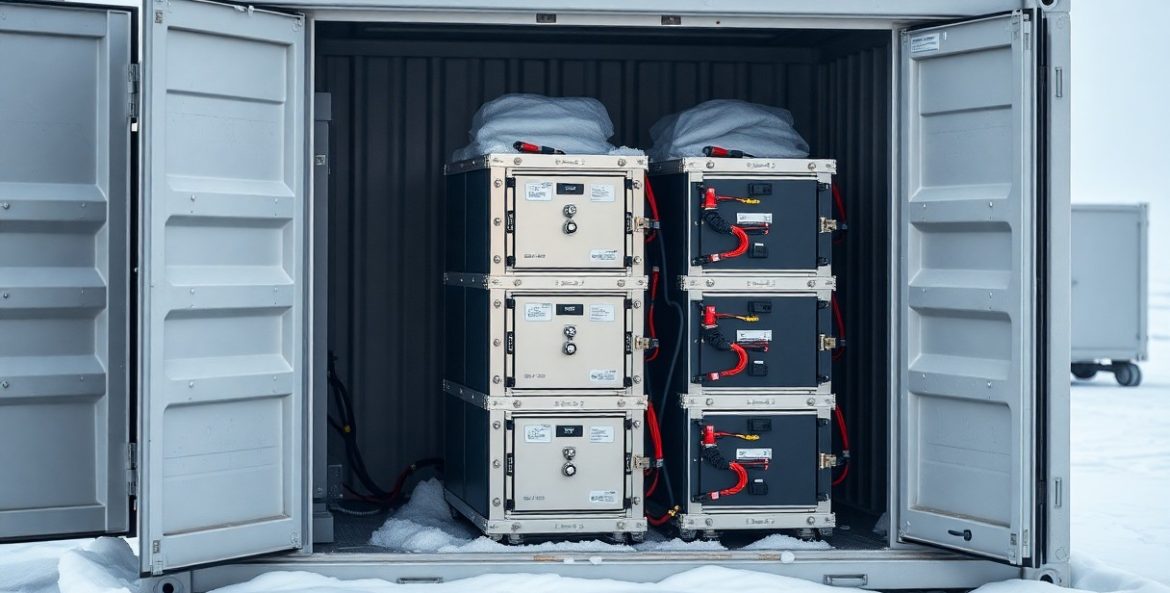
Just when you deploy energy storage into extreme heat, cold, salt spray, or shock, you must evaluate thermal runaway and catastrophic failure risks, choose robust materials and redundant controls, and implement rigorous testing and monitoring so your system achieves reliable, safe performance under harsh conditions.
Types of Energy Storage Systems
| Mechanical | Pumped hydro (100 MW-GW, 70-85% RTE), flywheels (kW-MW, ms response), CAES (adiabatic designs improve efficiency). |
| Electrochemical | Lithium‑ion (150-260 Wh/kg, 80-95% RTE), flow batteries (vanadium: >10,000 cycles, flexible duration), lead‑acid legacy systems. |
| Thermal | Molten salt in CSP (565°C, multi‑hour storage), sensible/latent heat tanks for process heat and grid balancing. |
| Chemical (Hydrogen) | Electrolytic H2 (33 kWh/kg), long‑duration storage and seasonal shifting; requires compression, liquefaction or carriers like NH3. |
| Electrical | Supercapacitors and superconducting magnetic energy storage (SMES) for sub‑second power buffering and high cycle life. |
- Mechanical
- Electrochemical
- Thermal
- Chemical (Hydrogen)
- Electrical
Mechanical Storage
Pumped‑storage hydro still represents the largest deployed capacity worldwide, with individual facilities routinely exceeding 100 MW and system lifetimes beyond 50 years; you will rely on topography and water availability when considering this option. For remote or constrained sites, CAES using geological caverns can offer multi‑hour durations at utility scale, though traditional diabatic CAES incurs fuel use during recompression whereas adiabatic CAES designs store and reuse heat to push round‑trip efficiency higher.
When you evaluate flywheels for harsh environments, note they provide sub‑second response and millions of cycles with minimal degradation, making them ideal for power quality and frequency control; however, you must mitigate the mechanical hazard posed by high‑speed rotors through containment and fail‑safe bearings. In cold climates, thermal conditioning of bearings and vacuum housings becomes a maintenance driver, while in hot, dusty sites sealing and active cooling dominate lifecycle costs.
Electrochemical Storage
Lithium‑ion dominates front‑of‑meter and behind‑the‑meter deployments because of its high energy density (typically 150-260 Wh/kg) and fast response; systems like Hornsdale (100 MW/129 MWh) demonstrate sub‑second dispatch and grid services revenue stacking. You should design BMS, thermal management, and cell balancing to handle high‑rate cycling-without them the risk of thermal runaway increases, especially when packs are exposed to temperatures beyond manufacturer ratings.
Flow batteries (vanadium redox, zinc‑bromine) provide long cycle life (>10,000 cycles) and independent power/duration scaling, which is valuable when you need predictable degradation over years in extreme temperatures; you will trade energy density for operational flexibility and lower fire risk. In cold or high‑humidity sites, you must account for electrolyte freezing points and corrosion control, while sodium‑ion and other emerging chemistries offer cost and temperature robustness improvements that may suit off‑grid or industrial installations.
For deeper technical planning you will quantify cell‑level performance curves (capacity vs. temperature, internal resistance growth per 1,000 cycles), specify active thermal control for deployments outside the -20°C to +40°C window, and run accelerated aging tests to validate your pack design against fielded benchmarks; Thou will integrate those results into your maintenance and spare‑parts strategy.
Tips for Designing Storage Systems
Prioritize cell chemistry trade-offs: choose LiFePO4 when you need high cycle life and thermal stability in sustained high-temperature environments, or NMC for higher energy density when weight and volume are limiting. In arctic deployments select cells rated for operation to at least -40°C and include active preheating; in desert sites design for sustained ambient >50°C and plan for forced cooling and derating. Monitor for thermal runaway risk zones-cells with internal resistance >50 mΩ or surface deltas >15°C need immediate attention.
Integrate a layered defense: combine robust mechanical enclosure, dedicated battery management system (BMS) with per-module temperature sensing, and both passive and active thermal controls. Use standards such as IEC 62619 and UN 38.3 as baseline tests and then perform site-specific environmental testing (salt spray, vibration, altitude) at worst-case extremes. Practical checklists include:
- Use hermetic sealing or IP66/67 enclosures for marine or dusty sites
- Specify stainless steel 316 or coated aluminum for corrosive atmospheres, accounting for galvanic isolation
- Implement cell-level fusing and gas vent detection tied to isolation relays
- Design for modular replacement and redundancy so a single module fault limits system impact
- Plan for field diagnostics and firmware updates over secure links to adjust derating curves
Material Selection
You should select cell chemistry and structural materials based on the specific hazards of the environment: LiFePO4 typically offers >2,000 cycles and much lower thermal abuse propagation than high-Ni chemistries, while NMC yields ~150-250 Wh/kg if you need compactness. For enclosures in coastal or chemical plants prefer stainless steel 316 or aluminum with high-performance coatings; polymers like PEEK or PPS are useful for internal mounts where continuous exposure to 80°C+ is expected.
You must address moisture and contamination with conformal coatings and selective gasketing; a hydrocarbon-contaminated environment requires non-absorbing insulation and flame-retardant materials. Protect against flammable electrolyte exposure by placing cells behind vent paths and integrating sacrificial pressure relief panels so that mechanical failure channels away from personnel and critical electronics.
Thermal Management
Active liquid cooling gives the tightest control for high-power systems-use a dielectric coolant (for example Novec-type fluids) or a closed-loop glycol system with a dedicated pump and heat exchanger to keep cell-to-cell temperature spread <10°C under 1C continuous discharge. Distribute temperature sensors every 10-20 cells and program the BMS to reduce allowable C-rate if any local sensor exceeds a 10-15°C threshold above pack mean. Fast-charge events can generate several kilowatts of heat in multi-hundred kWh packs, so size cooling capacity for peak events, not just steady-state.
Passive measures remain important: incorporate phase change materials (PCM) with melting points tuned to your target operating window (e.g., 35-45°C) to absorb spikes, and use high-conductivity thermal interface materials between cells and cooling plates to lower thermal resistance. Heat pipes and vapor chambers can transport hundreds of watts from hot spots to external sinks without active power; combine them with insulation layers if you need to retain heat in subzero conditions.
Control strategies matter as much as hardware: implement predictive thermal control that uses ambient forecasts and mission profiles to preheat or pre-cool packs, and tune setpoints so you avoid operating outside the 15-40°C range that optimizes cycle life and power. Assume that you validate the complete thermal system with combined environmental and abuse testing (thermal cycling, rapid heating, and controlled overcharge) before final deployment.
Step-by-Step Guide to Implementation
Implementation Steps Overview
| Step | Key actions and targets |
| Assessment of Requirements | Define peak power (kW) and usable energy (kWh), duty cycles (backup vs daily cycling), environmental range (e.g., -40°C to +55°C), regulatory tests (UL9540A, IEC 62619, NFPA 855), and site constraints (space, weight, transport). |
| System Configuration | Specify chemistry (LiFePO4 for high-cycle/thermal stability), inverter/PCS sizing with 10-20% headroom, BMS features (cell-level monitoring, SOC accuracy ±2-3%), redundancy (N+1 or 2N), enclosure rating (IP55-IP67, C5M for coastal), and thermal/fire mitigation strategy. |
Assessment of Requirements
Begin by quantifying the electrical mission: map hourly load profiles and worst-case events so you can size both power and energy accurately – for example, a remote telecom site that sees 10 kW peak and needs 80 kWh of autonomy requires at least an 80 kWh usable battery with a 10 kW continuous PCS and a design margin of 15-25% for aging and temperature effects. Factor in cycle life targets (e.g., 3,000+ cycles for daily cycling) and specify depth-of-discharge policy, since a 0.8 DoD strategy materially affects required pack capacity and lifetime.
Then layer in environmental and compliance constraints: if the site sees ambient +50°C summer peaks, plan for 10-20% capacity derating for many Li-ion chemistries and choose enclosure protection such as IP66 and C5M anti-corrosion coatings for salt-spray locations. Finally, list acceptance tests up front (capacity verification at 0.5C and 1C, thermal soak, insulation resistance, and UL9540A-style fire testing) so procurement and commissioning align with on-site risk tolerance and regulatory requirements.
System Configuration
Size the powertrain to match peak demands plus operational headroom: specify PCS continuous power ≥ peak load and target inverter + battery ratio giving 10-20% reserve. For a 500 kW peak site, you might choose two 275 kW inverters in an N+1 arrangement or three 200 kW units to allow one unit to be serviced without outage. Architect the battery as parallel modular strings sized for manufacturability and maintenance – for example, 4-string architecture where each string supplies 25% of the energy and one string can be isolated for service.
Define thermal management and enclosure specifics tied to the environmental assessment: expect system losses of roughly 2-5% of power during charge/discharge, so a 500 kW system can produce ~10-25 kW of heat that your HVAC or liquid cooling must remove. Choose between active air cooling for temperate sites and liquid cooling for high-power, high-ambient deployments; specify target coolant flow and delta-T (e.g., 0.5-1.0 L/min per kW for high-density liquid-cooled modules) and ensure the design includes filtration, redundancy, and freeze-protection if temperatures drop below 0°C.
Layer in safety, controls, and commissioning: implement a BMS with cell-level voltage and temperature monitoring, SOC accuracy to ±2-3%, and fast fault isolation to prevent propagation. Equip the container or room with multi-point thermal and smoke detection, automatic HVAC shutdown and active fire suppression (water-mist or approved clean-agent/aerosol), and interlocks to stop charging/discharging on fault. During commissioning, run acceptance tests such as a 0.5C discharge to verify usable energy, thermal imaging under load to detect hotspots, and simulated fault injections to validate protective trip times – these steps reduce the risk of thermal runaway and ensure the system meets performance and safety targets.
Key Factors to Consider
You need to weigh environmental stresses, electrochemical behavior, and maintenance strategy together: temperature extremes (often from -40°C to +60°C in field deployments), rapid thermal cycling from daily solar swings, high humidity and salt spray in coastal sites, plus shock and vibration on mobile platforms. Equipment selection should match the expected duty: for example, if your application requires frequent >1C discharge rates, plan for liquid or forced-air cooling and choose chemistries that tolerate high power. Battery choices matter – LFP (3000-6000 cycles) typically gives longer life and better thermal stability than high-energy NMC (1000-3000 cycles), while lead-acid remains tolerant of low-temperature starts but has lower cycle life and greater maintenance needs.
Design trade-offs become visible when you quantify them: thermal management can consume 1-5% of system energy in cold climates for heaters, and passive insulation plus phase-change materials (PCM) can reduce HVAC duty by a similar margin. Use the following checklist to align design, operation, and O&M requirements:
- Environmental sealing: specify IP66/IP67 for dusty/wet sites or IP68 for submersion; consider NEMA 4X for corrosion resistance
- Thermal strategy: passive insulation, PCM, forced-air, or liquid cooling depending on peak C-rate and ambient extremes
- Battery chemistry: match energy density vs. cycle life vs. thermal stability (LFP vs. NMC vs. lead-acid)
- Monitoring & BMS: SOC/SOH accuracy ±2-5%, cell-level balancing, and thermal runaway detection
- Serviceability: modular racks, hot-swap capability, and parts provisioning for remote sites
Environmental Parameters
You must characterize the full range of ambient conditions: maximum and minimum temperature, frequency of temperature swings, relative humidity, dust/sand load, salt fog exposure, and altitude (which reduces convective cooling). For instance, desert photovoltaics can see module surface temperatures exceeding 50°C, accelerating capacity fade through increased side reactions (chemical rates roughly double per 10°C rise). At the opposite extreme, batteries in Arctic installations often require thermostatically controlled heaters to keep cells above 0°C, with heating power typically representing 1-3% of system energy in steady winter operation.
Mitigations must be sized to measured conditions: choose IP or NEMA enclosure ratings after salt-fog (ASTM B117) and dust ingress testing, design ventilation intakes with filtration and cyclonic separators in sandy environments, and specify desiccant or active dehumidification where condensation risks exist. If your design has high C-rates or tight temperature bands, implement active thermal control (liquid cooling or heat pumps) and include pressure-relief or vent paths to manage gas evolution in fault scenarios.
Longevity and Maintenance
Your lifecycle targets drive chemistry and architecture: set a service-life goal (for stationary systems often 10-15 years) and pick a chemistry that meets cycle-life and calendar-life needs – LFP: 3000-6000 cycles at 80% DOD is common, NMC typically 1000-3000 cycles depending on stress. Implement a BMS that performs continuous cell balancing and logs SOC/SOH with ±2-5% accuracy, and schedule inspections: visual and enclosure checks quarterly, electrical diagnostics and capacity tests every 6-12 months, and deeper analyses (impedance spectroscopy) annually for high-value assets.
Design for low-touch maintenance in remote or hazardous sites by using modular, hot-swappable blocks, clear access paths, and remote telemetry with automated alarms; that reduces mean time to repair and allows predictive maintenance using trend analysis. Include spare modules staged locally or via quick-ship contracts, and architect redundancy (N+1 or N+2) for critical loads so a single module failure doesn’t cause downtime. Highlighted risk areas include thermal runaway detection and fire suppression strategy – integrate gas and temperature sensors with automated isolation and suppression.
Operational improvements you can implement range from automated cell-level balancing schedules and firmware over-the-air updates to regular capacity fade modeling that adjusts charge windows; train technicians on cell-swapping procedures and hazardous-material handling, maintain a parts kit for common failures, and ensure end-of-life recycling plans are contracted to avoid environmental liabilities. After you deploy predictive analytics and spares planning, you will reduce unplanned downtime and extend system life by an estimated 20-40%.
Pros and Cons of Different Approaches
Pros and Cons by Technology
| Pros | Cons |
|---|---|
| LiFePO4: >2,000 cycles at 80% DoD, excellent thermal stability, wide deployment in telecom and microgrid backup. | Lower energy density (~90-160 Wh/kg) than NMC; performance drops below 0°C unless heated; higher upfront cost vs lead‑acid. |
| NMC / NCA: high energy density (~180-260 Wh/kg), compact footprint, common in space‑constrained installations. | Higher thermal runaway risk and accelerated calendar fade at >40°C; lifecycle often <1,500 cycles depending on use. |
| Lead‑acid (VRLA, OPzV): low capital cost, well‑understood recycling stream, robust cold‑start behavior. | Very low cycle life (200-800 cycles typical) and sensitive to partial‑state‑of‑charge operation; heavy and large footprint. |
| Vanadium Redox Flow: decoupled power and energy, very long cycle life (>10,000 cycles), ideal for 4-12+ hour capacities. | Low energy density, large footprint, electrolyte cost and logistics, freeze/heat management needed in extreme climates. |
| Zinc‑bromine / Organic flow: lower material cost options for long duration, scalable energy capacity by tank size. | Complex balance‑of‑plant, electrolyte maintenance, lower round‑trip efficiency vs batteries (often <80%). |
| Sodium‑ion: improving energy density (≈100-160 Wh/kg), better high‑temperature tolerance and lower raw material risk. | Emerging supply chain, lower energy density than top Li chemistries, fewer long‑term field data sets. |
| Solid‑state (emerging): potential for higher energy density and suppressed thermal runaway. | Technology readiness and manufacturing scale remain limited; early cost is high and long‑term cycling still under evaluation. |
| Supercapacitors: extremely high power density, >1,000,000 cycles, excellent for sub‑second to minute grid services. | Very low energy density – not suitable for hour‑scale storage; cost per Wh is high for energy applications. |
| Compressed Air Energy Storage (CAES): long durations possible, low cost per kWh for large, site‑specific projects. | Requires geology or large caverns, round‑trip efficiency typically 40-70%, complex O&M and site permitting. |
| Thermal storage (molten salt, TES): excellent for coupling with CSP or industrial heat, multi‑hour to multi‑day capability. | System integration dependent, high temperature operation needs specialized materials; not direct electrical storage – conversion losses apply. |
Advantages of Various Systems
You can pick LiFePO4 when you prioritize long cycle life and passive safety; field deployments show 2,000-5,000 cycles under proper charge profiles, which makes it economical for daily cycling in renewable‑paired microgrids. Meanwhile, NMC or NCA remains the choice for space‑limited sites because their energy density (≈180-260 Wh/kg) reduces rack and enclosure costs, so you save on real estate and enclosure thermal management in urban or containerized systems.
For multi‑hour or duration‑focused projects, you should consider flow batteries or thermal storage: vanadium redox systems routinely deliver >10,000 cycles and let you scale energy independent of power, enabling 4-12 hour discharge without oversizing inverter stacks. At the other end, supercapacitors and hybrids help you meet high‑power, short‑duration demands – for example, smoothing sub‑second inrush currents at MV substations – while reducing stress on the primary battery and extending its life.
Drawbacks and Limitations
When you evaluate systems, account for how environment affects degradation: Li‑ion chemistries exposed to sustained temperatures above 40°C will see accelerated capacity fade, and internal cell temperatures approaching 120-150°C can trigger exothermic reactions leading to thermal runaway if not mitigated by the BMS and thermal controls. Flow and thermal systems often require significant footprint and auxiliary equipment – pumps, heat exchangers, or storage tanks – which raise site civil and O&M complexity, especially in remote or space‑constrained installations.
Supply chain and lifecycle constraints also limit choices: lead and vanadium require established recycling or handling streams, while emerging chemistries like sodium‑ion and solid‑state lack large‑scale field histories, increasing your performance and warranty risk. Additionally, some long‑duration approaches (e.g., CAES or large TES) impose siting and permitting hurdles that can extend project timelines by months to years compared with containerized battery solutions.
You must budget for safety and mitigation: adding active thermal management, cell‑level monitoring, fire‑suppression, and containment can increase system CAPEX and footprint – industry experience shows these systems often add an estimated 10-30% to installed costs depending on risk profile – and regulatory compliance (NFPA 855, local codes) can mandate further changes to enclosure design, ventilation, or separation distances that materially impact project economics.
Emerging Technologies in Energy Storage
Innovations in Materials
Materials science is delivering step-changes that directly affect how you design systems for extremes: solid-state electrolytes aim to replace flammable liquid electrolytes and target cell energy densities in the range of 300-500 Wh/kg, while lowering the risk of thermal runaway. You should watch developments in ceramic and sulfide electrolytes for their differing trade-offs-ceramics offer mechanical rigidity and dendrite suppression but require stringent stack pressure control, whereas sulfides provide higher ionic conductivity at lower stack pressure yet demand strict moisture control during manufacturing.
At the electrode level, silicon-based anodes and lithium-sulfur chemistries offer high theoretical capacities-silicon at ~3,579 mAh/g vs graphite at ~372 mAh/g and Li-S theoretical energy density ~2,600 Wh/kg-but you must mitigate silicon’s ~300% volume expansion and the polysulfide shuttle that shortens cycle life. Practical approaches you can implement include nano-structured silicon composites, robust binders, protective coatings, and solid-electrolyte interphases engineered to maintain Coulombic efficiency; fielded results already show silicon-blended anodes improving pack-level energy by 10-30% in commercial trials when accompanied by tailored BMS algorithms.
Advances in System Design
System architecture advances let you tailor storage to harsh sites: modular rack-and-container designs with integrated HVAC, fire suppression, and ingress protection enable deployments from −40°C Arctic sites to >50°C desert installations. Employ distributed thermal management to keep cell-to-cell temperature differentials under a few degrees-engineering teams report that maintaining uniformity within ±3°C markedly slows degradation pathways and preserves warranty-backed cycle life.
Control and power-electronics innovations also reshape resilience: bi-directional converters with sub-millisecond response, embedded fault detection, and hierarchical BMS orchestration let you combine batteries with supercapacitors or flywheels so that high-power transients are handled without deep battery cycling. In practice, hybridizing a battery with a supercapacitor module for short-duration peak shaving can reduce battery depth-of-discharge by 10-40%, extending service life while improving overall system round-trip performance.
On the standards and operations side, you should design to comply with UL 1973 and UL 9540A for ESS safety testing and follow IEEE 1547 for grid interconnection behavior; integrating digital-twin simulations and model-based prognostics into your commissioning reduces commissioning surprises and enables predictive maintenance workflows that have been shown in industry cases to cut unplanned downtime substantially. Implementing these layered protections-mechanical, thermal, electrical, and software-gives you a practical path to both higher availability and lower operational risk in harsh operating environments.
Summing up
Upon reflecting, you should adopt a systems-level mindset when designing energy storage for harsh operating conditions, integrating robust materials, thermal management, sealing, and electrical derating to protect performance and extend life. Your choices around cell chemistry, enclosure design, and thermal controls must align with validated environmental limits, while conservative safety margins and redundancy reduce the likelihood of catastrophic failure under stress.
You should also embed rigorous testing, real-world qualification, and continuous condition monitoring into your development and operational plans so you can detect degradation early and apply predictive maintenance. Balancing upfront cost with lifecycle resilience, designing for serviceability and recyclability, and adhering to relevant standards will help you deliver reliable, maintainable systems that meet both performance and safety requirements in demanding environments.