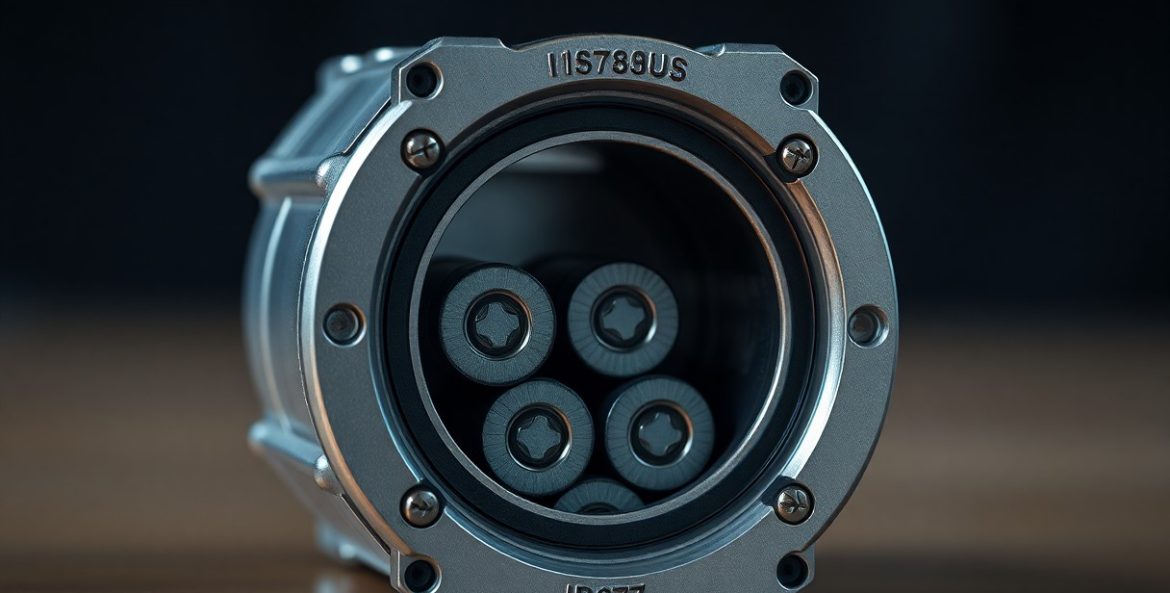
Housing protects battery cells from impacts, vibration, moisture and heat, so you must prioritize structural integrity, sealing and thermal pathways to keep your pack safe and functional. Emphasize mitigating thermal runaway and impact and moisture resistance, and incorporate robust sealing and controlled venting with accessible service points so you can balance safety, manufacturability and maintenance.
Types of Battery Housing
| Hard Shell | Rigid enclosures (aluminum, steel, polycarbonate) that deliver structural support, often 2-6 mm wall thickness; used in automotive and industrial packs to meet mechanical protection and IP65-IP6K9K washdown targets. |
| Soft Shell | Flexible jackets and molds (TPE, silicone, reinforced fabric) that prioritize weight savings and impact damping; common in handheld tools and consumer electronics where environmental protection is moderate and ergonomic fit matters. |
| Sealed | Enclosures designed to prevent ingress (gaskets, potting, hermetic seals) to achieve ratings like IP67/IP68; used when moisture and dust exclusion are required, with attention to thermal paths and UL/IEC pack testing. |
| Ventilated | Designs that permit controlled gas or heat venting (pressure-relief vents, flame arrestors, filtered breathers); selected for high-power or fast-charge systems where cell off-gassing or heat buildup must be managed. |
| Hybrid / Materials & Features | Combinations (hard frames with soft overmolds, sealed boxes with dedicated vents) that balance impact resistance, thermal conduction, and serviceability; typical trade-offs include IP rating vs. venting needs and manufacturability cost. |
- Hard Shell – sheet metal, machined aluminum, polycarbonate cases
- Soft Shell – TPE overmolds, silicone boots, fabric pouches
- Sealed – gasketed lids, potting compounds, welded seams
- Ventilated – pressure-relief valves, flame arrestors, filtered breathers
Hard Shell vs. Soft Shell
You’ll find that a hard shell enclosure gives you predictable structural behavior: aluminum housings 3-5 mm thick can serve as both impact shield and heat spreader, enabling you to meet vehicle-level drop tests (often 1-1.5 m drops per IEC/ISO procedures) and support coolant integration for thermal management. In practice, OEMs choose polycarbonate or ABS for lighter-duty packs where UV resistance and flame performance (UL94 V-0) are required, trading off weight for manufacturability.
Conversely, if you need improved shock absorption and ergonomic form, a soft shell overmold or fabric pouch reduces transmitted peak acceleration and can shave system mass by 10-30% compared with boxed metal enclosures in small tools and portable devices; however, you must accept lower ingress protection unless you add secondary sealed elements or coatings.
Sealed vs. Ventilated
When you design a sealed pack, you’re aiming for environmental exclusion: IP67/IP68 targets are achieved with properly specified gaskets, potting, or welded seams, and you must verify long-term aging and thermal cycling to avoid seal failure. Automotive modules often use welded aluminum enclosures with dedicated thermal paths and sensor ports, while consumer sealed packs rely on adhesives and potting compounds that can complicate repair and recycling.
Choosing a ventilated approach means you prioritize safe gas and heat escape over full ingress protection: vents equipped with flame arrestor mesh or pressure-relief valves are common in e-bike and industrial high-power packs where cell off-gassing or rapid thermal excursions occur. You’ll need to test vent flow capacity and ensure that any venting solution does not create a pathway for liquid ingress beyond acceptable risk levels.
Additional detail: in many real-world designs the optimal solution is hybrid – for example, an EV module uses a sealed structural housing for fluid protection but includes engineered burst panels and routed vent ducts to channel gases away from occupants and critical electronics; you should validate such designs against standards like IEC 62133 and perform abuse tests (overcharge, nail penetration, thermal ramp) to verify that vents operate as intended. Thou take into account manufacturing, maintenance, and end-of-life handling when deciding between sealed and ventilated strategies.
Important Design Factors
You need to weight mechanical robustness, environmental sealing and serviceability against cost and weight targets; for many applications that means designing for impact energies of 20-200 J (handheld to module drops) or absorbing crash loads up to several kJ for vehicle packs, while also meeting transport and safety standards such as UN 38.3 and relevant UL/IEC requirements. Specify vibration endurance (typical automotive electronics: continuous 4-10 g, shock pulses to 50-100 g), target operating temperatures (commonly −30 °C to +60 °C for automotive), and ingress protection (select IP67, IP69K or equivalent based on washdown and immersion risk) early in the design cycle to avoid late-stage rework.
- mechanical protection
- environmental sealing
- thermal management
- serviceability
- weight & cost
This will determine material choices, joining methods and the testing matrix you put in place.
Mechanical Protection Requirements
You should design enclosures to prevent puncture, compression and short-circuit risks by incorporating sacrificial crush zones, internal energy-absorbing foam (e.g., closed-cell polyurethane or polyethylene at 30-200 kg/m³), and rigid cell retention features that keep cells from moving under 50-100 J impacts. Fastener locations and torque specs must be engineered so that repeated service cycles don’t loosen clamps; consider captive fasteners, thread-locking compounds or spring washers for assemblies exposed to >5 g RMS vibration.
Use a combination of structural materials – aluminium for high stiffness-to-weight, polycarbonate blends for impact resistance, and stainless-steel inserts at load points – and validate with targeted tests (drop table, 3-axis shaker, 1000-hour vibration soak). Prioritize pouch/soft-cell protection with layered barriers and avoid hard internal edges; include dedicated vent paths or rupture panels sized to relieve pressure without directing flames toward sensitive components to mitigate thermal runaway propagation.
Environmental Considerations
You must account for moisture, dust, salt spray and chemical exposure by selecting appropriate sealing strategies: elastomer gaskets (EPDM or fluorosilicone for fuel/solvent resistance), taped seams, and pressure-equalization vents (Gore vents) to prevent condensation while maintaining IP67/IP69K performance. Specify corrosion-resistant finishes (anodize, powder coat, or 316 stainless) and test to standards such as ISO 9227 salt spray for 240-500 hours depending on expected lifetime in coastal or marine environments.
Temperature cycling and UV exposure will degrade both polymers and elastomers; run thermal shock cycles (e.g., −40 °C to +85 °C, 100 cycles) and UV/accelerated weathering tests (e.g., 1000 hours) when your housings sit outdoors. Include humidity soak and condensation tests, and consider conformal coatings or potting for electronics in enclosures where ingress is unavoidable to protect against corrosion and leakage currents.
Address chemical compatibility proactively by selecting gasket and potting materials rated for exposure to common automotive fluids (diesel, gasoline, brake fluid) and cell electrolytes; use flame-retardant materials meeting UL94 V-0 where fire exposure is possible, and incorporate filtered venting or flame arrestors to manage gas release safely during failure events.
Design Tips for Durability
You should target measurable performance goals: design the battery housing to meet at least IP67 for ingress protection if the product faces wet environments, and aim for an IK08 or higher for impact resistance in portable systems; for industrial or automotive packs plan for drop and crash scenarios of 1.5-2.0 m and energy absorption in the range of tens of kilojoules. Use finite-element analysis to identify stress risers and validate that nominal wall thicknesses (for plastics typically 2-3 mm, for aluminum sheet 1.5-3.0 mm) keep peak stresses below material yield; fatigue life targets of >10,000 cycles for vibration-prone applications are common. Highlighting design details like cell compartment barriers, dedicated venting paths and separate electronics enclosures reduces the chance of thermal runaway propagation and improves overall durability.
Prioritize test-driven choices: subject prototypes to 1000 thermal cycles from -20°C to 60°C, salt-fog exposure for 48-96 hours where corrosion is a risk, and 20-100 drop tests from specified heights to validate mounts and fasteners. Use gaskets rated to UL94 V-0 where flame resistance is needed and specify gasketing compression to 10-20% to maintain IP seals over life. Implement routine inspection points and design for replaceable sacrificial components such as crush rails or external skid plates to protect the core battery housing.
- battery housing: target IP and IK ratings early in the spec
- material selection: match modulus, thermal conductivity, and flammability rating to the use case
- structural reinforcements: use ribs, shear panels and energy-absorbing zones
- impact resistance: validate with drop tests and FEA to defined energy levels
- thermal management: integrate cooling channels or thermally conductive interfaces as needed
Material Selection
You should weigh mechanical strength, thermal conductivity and manufacturability: for low-cost enclosures consider ABS or PC-ABS blends (tensile strength roughly 40-50 MPa) where impact resistance and ease of molding matter, and choose polycarbonate (≈60-75 MPa) if higher impact strength and thermal stability are required. For metal solutions, aluminum 6061-T6 offers yield strength around 240-276 MPa and thermal conductivity ~167 W/m·K, making it ideal when you need both structural support and heat-sinking; stainless steel is heavier but provides superior puncture resistance for hazardous environments. Highlight the most dangerous failure modes by selecting materials with appropriate flame-retardant ratings (UL94 V-0) and consider coatings or anodizing for corrosion protection in coastal or chemical-exposure applications.
When you need very high stiffness-to-weight, evaluate carbon fiber reinforced polymers (CFRP) or hybrid laminates; typical tensile strengths exceed 600 MPa depending on layup, and you can tailor stiffness directions to resist bending and torsion. Balance density and cost: CFRP reduces mass but complicates venting and repair, while molded polymers let you integrate ribs and bosses directly to save assembly steps. For thermal interfaces, specify phase-change pads or thermally conductive elastomers with conductivities of 1-5 W/m·K between cells and the housing to improve heat extraction without creating hard stress points.
Structural Reinforcements
You should integrate ribs, fillets and bosses to remove stress concentrations and increase bending stiffness without massively increasing mass; a common rule is rib thickness of 0.6-1.0× the nominal wall thickness and a fillet radius at least equal to the wall thickness to avoid sharp transitions that initiate cracks. Use continuous load paths from mounting points to chassis using shear panels or internal frames, and place fasteners with spacing of 50-80 mm depending on load to avoid local cantilevered loads. Add isolated cell barriers and internal subframes to localize impact damage so a single cell failure doesn’t compromise the whole pack, and mark these barriers as critical for inspection.
Design intentional deformation zones or crush rails for higher-energy impacts; automotive-grade battery packs often include sacrificial rails that absorb collision energy and direct deformation away from cells, while industrial packs use honeycomb or foam energy absorbers tuned to specific energy levels. You can emulate successful architectures from automotive examples such as structural aluminum trays combined with shear planes that decouple the crash loads from cell stacks. Use FEA to tune thickness and stiffener placement to meet target peak decelerations (for instance keeping peak g-loads under 50-60 g for sensitive modules) and validate with physical crash or drop tests.
Fastening and joining choices strongly affect long-term durability: prefer blind rivets or captive screws where serviceability is required, and use structural adhesives or potting compounds to distribute load and damp vibration in high-cycle environments; for example, epoxy potting around busbars reduces fretting and contact loss in high-vibration applications. You should plan for differential thermal expansion-use elastomeric mounts with durometers of 30-60 Shore A between rigid frames and cell trays to absorb movement and prevent fatigue at screw holes. This ensures predictable failure modes, easier maintenance, and reduced risk of thermal runaway propagation.
Step-by-Step Design Process
| Step | Action / Key Targets |
|---|---|
| Initial Assessment | Set environmental targets: IP67 (1 m immersion, 30 min), operating temperature range typically -20°C to +60°C, vibration spectrum ~10-2000 Hz at ~3 g RMS for vehicular use, and intended mechanical loads such as a 1.5 m drop onto concrete for portable packs. Define serviceability goals (field-replaceable vs sealed), lifecycle (cycles, e.g., 1,000-5,000 charge cycles), and weight/cost constraints. |
| Concept & Material Selection | Compare materials (aluminum 2-4 mm for high stiffness, polycarbonate 3-6 mm for impact resistance, glass-filled nylon for chemical resistance). Balance thermal conductivity, EMI shielding needs, and manufacturability (die cast vs injection mold vs CNC). |
| Mechanical Design | Specify wall thickness, ribs, and internal supports to limit deflection (<0.5 mm under worst-case loads). Include crush zones or energy absorbers to handle 100-300 J impacts depending on application. |
| Sealing & Venting | Design gasket grooves, specify O-ring cross-section and compression (10-25% squeeze). Provide a controlled vent path or pressure-relief mechanism to prevent enclosure rupture during cell venting; ensure venting does not compromise IP rating under normal conditions. |
| Prototyping & Testing | Plan 3-5 iterative prototypes: rapid-fit checks with 3D printing, functional thermal/CAD-verified prototypes in CNC or vacuum cast, followed by pre-production tooling sample. Define pass/fail criteria for ingress, mechanical deformation, thermal performance, and electrical isolation. |
| Certification & Production | Map required tests (IP, UN38.3 if shipping, UL 2271/2054 for certain markets) and build QA plans: first-article inspections, batch pressure/leak tests, and torque control for fasteners. |
Initial Assessment
Begin by quantifying the environments your design must withstand: choose an ingress rating like IP67 if temporary immersion is expected or IP68 for continuous submersion, and set operating temperature windows (typical consumer targets are -20°C to +60°C). You should also specify mechanical load cases-common benchmarks are a 1.5 m drop onto concrete for portable units and sustained vibration profiles around 10-2000 Hz at ~3 g RMS for automotive applications-so your CAD validation and FEA use realistic inputs.
Next, convert those environmental targets into design constraints: define maximum allowable enclosure deflection (for example ≤0.5 mm at mounting points), weight budgets (e.g., <2 kg for handheld packs), and serviceability choices (field-replaceable modules vs fully sealed). Also document safety scenarios such as cell venting, ingress during maintenance, and potential chemical exposure so your material selection and sealing approach directly mitigate those risks.
Prototyping and Testing
Kick off with rapid prototyping to verify form and assembly: use SLA or FDM prints for fit checks, then move to a functional prototype in CNC aluminum or vacuum-cast polycarbonate to evaluate thermal mass and impact resistance. Run targeted mechanical tests-drop tests from 1.5 m, 2000-cycle vibration, and static crush loads-while measuring deformation and fastener integrity; set pass thresholds like no permanent seal breach and insulation resistance above 1 MΩ after environmental exposure.
Follow with environmental verification: perform thermal cycling across the intended range (for qualification you might test from -40°C to +85°C for several cycles), salt spray or chemical exposure where applicable, and ingress testing per the chosen IP rating. Plan for at least 3 iterative prototype cycles-fit, functional, and qualification-so you can refine gasket compression, vent geometry, and assembly torques before tooling.
To reduce risk, instrument prototypes with displacement sensors, thermocouples, and humidity probes during tests so you can correlate failure modes to specific design features; for example, trace a seal leak path to a corner radius or fastener pattern and adjust ribbing or seal groove geometry accordingly before releasing to production tooling.
Pros and Cons of Different Designs
| Design / Option | Pros & Cons |
|---|---|
| Hard shell (aluminum, steel, polycarbonate) | Pros: High structural support, typical wall thickness 2-6 mm, can meet crash standards and provide EMI shielding; Cons: Higher mass and cost, potential for galvanic corrosion (aluminum-steel interfaces), thermal conduction can require separate insulation strategies. |
| Soft shell (pouch, film, TPU wrap) | Pros: Lower weight (often 20-40% lighter vs rigid), conformal packaging for irregular cell arrays; Cons: Poor puncture resistance, harder to achieve IP67 without external enclosure, more complex venting management. |
| Composite (fiber-reinforced plastics) | Pros: High specific strength, tailored stiffness-to-weight, EMI mitigation with metallized layers; Cons: Higher manufacturing complexity, repair is difficult, variable thermal conductivity. |
| Encapsulation / potting | Pros: Excellent vibration damping and dielectric isolation, reduces micro-movement; Cons: Serviceability reduced, adds thermal insulation that may worsen hotspots, increases recycling complexity. |
| Modular / removable packs | Pros: Easy service and replacement, can meet safety with mechanical latches and seals; Cons: More sealing interfaces to manage, connector wear and ingress risk over lifecycle. |
| Integrated cooling channels | Pros: Direct thermal control, can limit cell delta-T to <±5 °C in high-power applications; Cons: Adds complexity, potential fluid leak paths, requires HVAC/thermal subsystem integration. |
| Pressure-relief / venting designs | Pros: Controls gas escape path and reduces propagation risk when designed per standards; Cons: Can compromise ingress protection and requires careful placement away from occupants/components. |
| EMI/Shielded enclosures | Pros: Reduces radiated emissions and susceptibility, metal housings provide shielding of >60 dB when sealed; Cons: May require gasketing that degrades, increased weight and cost. |
Advantages of Hard Shell Housing
Hard shells give you predictable mechanical performance under impact and compression: typical aluminum or steel trays with 2-6 mm walls readily survive drop tests used in industrial and e‑mobility applications (for example, 1.5 m drop onto concrete or standardized crash loads). You can exploit the enclosure as a primary structural member, enabling greater resistance to puncture and penetration compared with film-based solutions, and you gain improved EMI shielding and straightforward mounting points for sensors, cooling plates, and connectors.
In practice, manufacturers use welded or bonded aluminum housings in automotive battery packs to meet NVH and crash requirements while providing a thermal path-aluminum can improve heat spreading by roughly 1.5-2× compared with typical thermoplastics. You also get serviceability advantages: bolted panel access with gasket seals lets you design for IP66-IP67 without resorting to permanent potting, so you can perform cell-level maintenance or module swaps when required.
Disadvantages of Soft Shell Housing
Soft shells reduce mass and pack volume-pouch-based systems can achieve a 20-40% weight reduction compared with equivalent rigid enclosures-but they expose you to higher mechanical risk: puncture, seam failure, and shear during edge impacts are common failure modes. You will find it difficult to attain consistent IP67 performance with only a film wrap; meeting ingress and impact specs typically forces you to add an external cage or overmold, eroding the original weight savings.
Thermally, soft shells provide little heat spreading, so you must design stronger thermal management at the cell or module level: without conductive interfaces, local cell temperatures can rise several degrees under high discharge, increasing the risk of cell imbalance or accelerated degradation. In safety testing, pouch-based systems often require additional flame-retardant barriers and dedicated vent channels to avoid creating uncontrolled vent paths that could propagate thermal runaway.
Mitigation strategies you can employ include an external rigid frame, selective potting around high-risk areas, use of fire-retardant TPU films, and integration of swelling sensors; moreover, you should validate designs with abuse tests such as nail penetration, thermal propagation trials, and repeated drop cycles to quantify the residual risk before deploying soft-shell designs in occupant-facing or high-energy applications.
Maintenance and Longevity
Regular Inspection Protocols
You should schedule visual and electrical inspections based on duty cycle: for high‑use commercial systems inspect monthly, for stationary backup or consumer devices every 3 months, and perform a comprehensive audit annually. During each visual check verify gasket integrity, fastener torque retention, evidence of electrolyte seepage, corrosion on terminals (look for white or green deposits), and any deformation of the housing or cell pouches. For electrical checks measure open‑circuit voltage and internal resistance (IR)20% or a capacity drop below 80% of rated typically indicates end‑of‑life or imminent failure and should trigger module replacement or further diagnostics.
Include environmental verification tied to the IP rating you designed for: perform a seal/leak test after any service that opens the enclosure and run a salt‑spray (ASTM B117) or humidity exposure sample every 12 months if units operate in coastal or industrial atmospheres. Use a thermal camera to scan for hotspots during charge/discharge cycles – a local rise of >10 °C versus pack average often points to poor cell contact, loose busbars, or delamination in a pouch cell. Document each inspection with date, measured values, and corrective actions to build trends that let you predict maintenance needs before they become failures.
Repair Techniques
When you repair housings, prioritize restoring the original mechanical and environmental performance: replace gaskets with materials matched to the temperature and chemical exposure (EPDM or silicone for −40 to +125 °C applications), use marine‑grade stainless hardware and threadlock on vibration‑prone assemblies, and apply structural adhesives (epoxy adhesives rated for your operating temperature) for non‑serviceable joints. For cell‑level repairs always remove the affected module and replace with a matched cell in chemistry, capacity, and manufacture date to avoid imbalance; do not solder directly to cells, use approved spot‑welding or manufacturer‑specified terminals to prevent heat damage and loss of capacity.
After mechanical or cell replacement you must revalidate electrical protection: recalibrate or replace the BMS if a cell group is changed, perform cell balancing, and run a capacity verification at a C/3 discharge rate plus a 24-72 hour soak/thermal stability test. If repairs expose the pack to ingress testing, repeat the IP test sequence (immersion for IP67 or prolonged submersion for IP68) and a full functional cycle count of at least 50 cycles under normal load to confirm long‑term behavior.
Conclusion
With this in mind, you should approach battery housing design as a system-level exercise that balances mechanical strength, environmental sealing, thermal management, and manufacturability. Select materials and geometries that provide impact and vibration resistance while enabling effective heat paths and corrosion protection, and use gaskets, seals, and coatings sized to meet targeted IP and chemical exposure requirements. Incorporate features for serviceability and safe venting, and align your choices with weight, cost, and assembly constraints to maintain performance across the expected operating envelope.
You must validate the design through targeted testing, simulation, and quality controls to verify ingress protection, shock and vibration resilience, thermal behavior, and long-term durability. Apply standards and a risk-based design process to prioritize mitigations, document maintenance and failure modes, and iterate on prototypes to ensure your housing consistently protects cells under real-world mechanical and environmental loads throughout the product lifecycle.