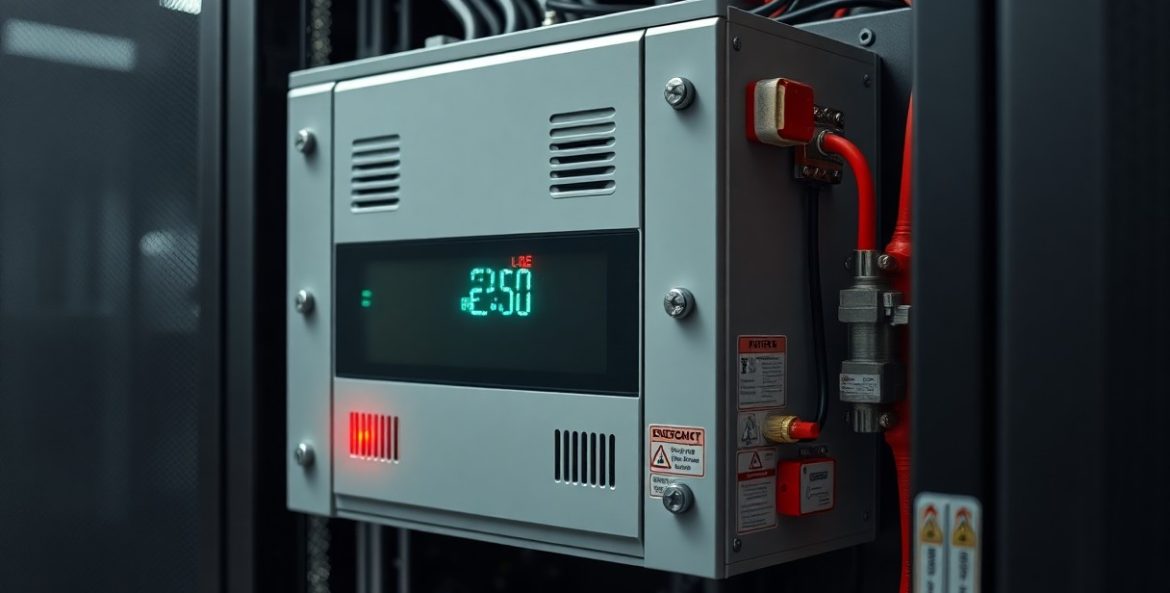
Just because batteries are compact doesn’t mean they can’t fail; you must prioritize thermal runaway prevention through robust BMS, temperature sensing, and cell balancing, add redundant protections like fuses and isolation, maintain strict charging limits and certified components, and implement real-time diagnostics so you can detect faults early-these measures reduce the risk of fire or explosion and minimize downtime while ensuring safe, continuous operation of your critical systems.
Types of Battery Safety Mechanisms
You will see a layered approach across applications: mechanical and chemical safeguards at the cell level, an electronic BMS for monitoring and control, dedicated overcurrent protection for short-circuit interruption, and thermal management to keep cells inside safe operating windows. Typical designs combine these so a single failure doesn’t cascade; for example, a pack may use a fusible link, a contactor controlled by the BMS, and active coolant to prevent thermal runaway propagation above ~150-200°C.
Manufacturers commonly validate each layer with tests: nail/impact tests at the cell level, IEC 62133 and UL 1642 for cells, and system-level abuse tests (e.g., 1C charge/discharge cycles, 500 thermal cycles). You should expect to see redundancy on high-energy systems – dual current-sensing, two-stage contactors, and both passive and active balancing to protect against overvoltage and cell mismatch.
| Battery Management System (BMS) | Monitors cell voltage, temperature, SOC; executes charge cutoff, cell balancing, and fault logging (example: cell-level 4.2V cutoff for Li-ion). |
| Thermal Management | Active liquid or air cooling, heat pipes, or phase-change materials to maintain 20-40°C operating range and limit propagation. |
| Overcurrent Devices | Fuses, PTCs, CID/MOSFET disconnects sized to interrupt short-circuit currents (can be >1,000 A in EV packs) and meet I2t requirements. |
| Voltage Regulation & Balancing | Cell balancing (passive shunt or active transfer), charger algorithms, and over/undervoltage cutoffs (e.g., 4.2V/2.5V per cell limits). |
| Mechanical/Chemical Safeguards | Current interrupt devices, pressure vents, separator shutdown features and safe cell chemistries (e.g., LFP has higher thermal stability vs NMC). |
- Redundancy: dual-sensor layouts for temperature and voltage to prevent single-point failures.
- Fail-safe disconnects: contactors that open on fault plus a mechanical fuse.
- Active balancing: extends life and prevents high-voltage cell drift in large packs.
- Standards testing: IEC 62133, UL 1642, and system-level EV/aviation standards for verification.
Thermal Management Systems
You should design thermal systems to limit peak cell temperatures under both steady-state and abuse conditions: a common target is keeping cells below 60°C during high-rate discharge and below 150°C to avoid thermal runaway initiation. In practice, automotive packs use liquid cooling with coolant channels and a plate or foil interface; this approach achieves heat removal rates of several kW for high-power applications and maintains uniform cell-to-cell temperature spread within 2-4°C.
For stationary or lower-power systems, passive options such as heat sinks, phase-change materials, or thermal spreaders provide safety without pumps. You will also find fire barriers and propagation-resistant modules in aviation and data-center UPS, where a single cell failure must not escalate – manufacturers often validate with thermal propagation tests showing containment for 10-30 minutes depending on design.
Overcurrent Protection
Your overcurrent strategy mixes sacrificial and resettable devices: a fast-acting fuse or current-limiting device for catastrophic faults and an electronic MOSFET disconnect controlled by the BMS for managed shutdowns. In EV packs, fuses are rated to interrupt several kA and are coordinated with contactor opening times to limit energy let-through (I2t), while PTCs provide a resettable response for lower-level faults.
Designers size devices based on expected short-circuit currents; for example, a 400 V, 100 kWh pack can produce peak fault currents >10 kA, so overcurrent devices and busbar geometries are modeled with electromagnetic and thermal simulations to ensure safe interruption and avoid welding of contacts. You should also include fast current-sensing (<1 ms) and redundant measurement paths to ensure timely electronic shutdown.
Testing includes time-current curve verification and abusive short tests where you confirm the fuse clears within specified milliseconds at multiples of rated current; compliance with standards such as UL 2580 for EV traction batteries is common in high-energy systems.
Voltage Regulation
You will rely on the BMS and charging system to enforce overvoltage and undervoltage thresholds: Li-ion cells typically use a 4.2V charge cutoff and ~2.5-3.0V discharge cutoff per cell, with pack-level tolerances tightened by balancing. Passive balancing shunts off excess cell charge using resistors and is simple and robust, while active balancers transfer charge between cells to improve efficiency in large packs and extend usable capacity by up to 5-10%.
Chargers implement CC-CV (constant current-constant voltage) profiles and often include temperature-compensated voltage limits and adaptive endpoints for aged packs; in fast-charging scenarios you should limit cell delta-V to <50 mV to avoid over-voltage stress on individual cells. Voltage regulation also involves EMI filtering and surge protection to prevent transients from coupling into cell terminals.
Active balancing systems can recover and redistribute hundreds of watts in large packs, reducing imbalance-related cutoffs and improving cycle life, but they add complexity and require validation under worst-case imbalance and fault conditions.
Assume that your system layers these mechanisms, validates them to relevant standards (IEC 62133, UL 1642, UL 2580), and documents time-current curves, thermal propagation tests, and balancing performance.
Tips for Ensuring Battery Safety
You should treat battery safety as an operational discipline: establish clear inspection intervals, define alarm thresholds, and enforce BMS configuration baselines. Implement focused checks such as monthly visual inspections for swelling or corrosion, quarterly capacity and internal resistance tests (e.g., CCA or impedance spectroscopy), and annual full-discharge / recharge cycle validation to detect creeping degradation; manufacturers typically recommend capacity verification every 6-12 months for stationary systems and every 3 months for high-use backup arrays. Integrate logging so you can correlate events – for example, correlate a 3°C rise per cycle with capacity loss to decide when to replace modules.
- Regular Maintenance: scheduled inspections, torque checks on terminals, and electrolyte-level verification where applicable
- Temperature Monitoring: per-cell or per-module sensors, set alarms at manufacturer thresholds (often 45-60°C)
- BMS tuning: sample rates (1-10 Hz), cell balancing windows, and trip setpoints
- Safety Drills: procedural tests for rapid shutdown and isolation every 6-12 months
Regular Maintenance Practices
You should implement a tiered maintenance program that separates visual, electrical, and functional checks. Visual inspections catch mechanical issues like terminal corrosion and swelling; electrical checks include per-cell voltage spreads, series-string insulation resistance, and internal resistance measurements (accept a rise of >20% as an early warning sign). For example, in telecom sites monthly visual checks plus quarterly capacity tests reduced unexpected string failures by over 30% in a multi-site operator study.
When you perform replacements, follow a staged approach: retire cells once they hit the manufacturer’s end-of-life criteria (commonly 80% rated capacity or a defined internal resistance increase), and always match age, chemistry, and state-of-charge when adding new cells to a string. Calibrate torque on busbar connections to specified Nm values, and keep a maintenance log with serial numbers and test values to enable trend analysis and failure-forensics.
Maintenance Checklist
| Task | Frequency & Details |
| Visual inspection | Monthly – swelling, leakage, terminal tightness (use calibrated torque wrench) |
| Voltage & IR testing | Quarterly – per-cell voltage spread, internal resistance; flag >20% change |
| Capacity verification | 6-12 months – full discharge/charge or manufacturer-recommended test |
| Firmware/BMS audit | Annually – verify setpoints, sampling rates (1-10 Hz), and balancing behavior |
Temperature Monitoring Strategies
You should deploy distributed temperature sensing rather than relying on a single ambient thermostat; monitor at the cell, module, and enclosure levels with thresholds based on chemistry – commonly set alarms at 45°C (warning) and 60°C (critical) for many Li-ion applications. Use a combination of NTC sensors, thermocouples, and IR scanning during commissioning to establish baseline hotspots and thermal gradients; sampling rates of 1-10 Hz capture transient events in fast-cycling systems.
When you see a sustained temperature delta exceeding 3-5°C between adjacent modules under steady load, initiate staged mitigation: increase cooling duty, reduce charge/discharge rate (below 0.5C if possible), and if thresholds persist, execute controlled isolation. Field examples show that limiting charge current to 0.2-0.5C during high ambient temperatures can extend cycle life and prevent thermal escalation in battery banks exposed to summer peaks.
Temperature Monitoring Matrix
| Sensor Location | Action & Thresholds |
| Per-cell | Warning 45°C, Critical 60°C; trigger cell-level balancing and BMS alerts |
| Module | Detect intra-module gradients >3-5°C; throttle current to 0.2-0.5C |
| Enclosure/Ambient | Activate HVAC/ventilation when ambient >35°C; escalate at 40-45°C |
| IR scans | Quarterly commissioning and after maintenance to spot contact hotspots |
You should augment continuous sensing with periodic thermal imaging and data-driven thresholds: analyze 6-12 months of logs to set dynamic alarm bands tied to load profiles and seasonal ambient shifts, and ensure the BMS can execute rate-limiting and safe-isolation automatically when thermal excursions exceed predefined curves.
Temperature Deep-Dive
| Parameter | Recommended Practice |
| Sampling Rate | 1-10 Hz for module/cell; 0.1-1 Hz for ambient |
| Alarming | Multi-tier: warning, action (derate), critical (isolate) |
| Mitigation | Derate to 0.2-0.5C, increase cooling, controlled isolation |
| Analysis | Trend over 6-12 months; correlate temperature vs capacity loss |
This final integration of maintenance, monitoring, and automated mitigation forms the operational backbone that prevents escalation and preserves both safety and uptime.
Step-by-Step Guide to Implementing Safety Mechanisms
| Implementation Checklist | |
| Assessment | Define capacity (Ah), nominal voltage, max continuous and peak discharge (C-rate), expected cycle life, operating temperature range, and applicable standards (e.g., IEC 62133, UL 1973, ISO 26262 for automotive). |
| Design | Select BMS topology (centralized, distributed, or modular), cell chemistry, cell balancing method, and protective relays/contactors; size fusing and cabling for max fault current plus 25% margin. |
| Installation | Place BMS, temperature and voltage sensors, and disconnects for accessibility; use flame-retardant enclosures, venting paths, and physical separation for high-energy modules. |
| Validation | Run electrical, thermal, mechanical, and abuse tests (short-circuit, overcharge, nail-penetration, thermal propagation); perform environmental cycling and EMC tests per product class. |
| Commissioning | Calibrate sensors, verify SOC/SOH algorithms, test watchdogs and fail-safe routines, and execute site acceptance tests with predefined pass/fail criteria. |
Assessment of Battery Requirements
You should begin by quantifying the system-level energy and power needs: specify nominal pack voltage, required energy (kWh), and continuous/peak power in kW or C-rate so you can size cells and the BMS correctly. Include environmental envelopes – for example, if the system will see -20°C to +60°C, plan for derating and specify heater or cooling strategies; many Li-ion chemistries will lose >20% usable capacity below 0°C and face elevated risk above 60°C.
Next, evaluate safety, regulatory, and mission redundancy needs: determine whether single-fault tolerance, 2N redundancy, or hot-swap capability is required and reference standards such as IEC 62619 for industrial cells or ISO 26262 for safety-related automotive systems. Also allocate metrics for performance validation – set target cycle life (e.g., >80% capacity after 1,000 cycles), internal resistance growth limits, and acceptable self-discharge rates to guide cell selection and BMS algorithms.
Installation of Safety Features
You should install a properly sized BMS with independent current sensing, cell-level voltage monitoring, and active cell balancing; for systems above 100 A, include redundant current transducers and a hardware overcurrent interrupt (fuse + contactor) that opens within the specified fault clearing time (typically <10 ms for high-energy faults). Use cable and busbar sizing that supports the maximum fault current; for example, design cabling with a 25-50% safety margin over steady-state current and use insulated barriers between high-voltage and low-voltage runs.
Position thermal sensors at worst-case hot spots – pack corners, near high-current interconnects, and at controller electronics – and route venting to avoid directing gases toward occupants or sensitive electronics; installing flame-retardant separators and a passive thermal propagation barrier can limit module-to-module propagation to under 1 module in many validated designs. For positive isolation, implement MOSFET or contactor-based precharge circuits to manage inrush during connection, specifying precharge resistor values to keep inrush below safe thresholds (for example, <10x steady-state current).
Additionally, you must integrate mechanical protections: torque connectors to manufacturer specs, strain reliefs, and vibration-rated mounting; verify connector ratings (voltage, current, IP rating) and include clear labeling for service disconnects so you and technicians can safely perform maintenance.
Testing and Validation Protocols
You should develop a layered test plan: component-level (cells, fuses, sensors), module-level (thermal runaway propagation, overcharge, internal short), and system-level (pack fault injection, insulation resistance, high-potential test, EMC, vibration, and shock). Run abuse tests such as external short-circuit, forced overcharge to +10% above max charge voltage, and nail-penetration on representative samples; pass criteria typically require no sustained fire and no catastrophic rupture for the tested cell class.
Follow environmental qualification: perform thermal cycling across the specified range (for many industrial packs -40°C to +70°C for storage and -20°C to +60°C for operation), humidity soak (e.g., 85% RH at 40°C for 96 hours), and vibration per applicable profiles (for transportation or aerospace, use 5-25 Hz sweep and random vibration levels defined by the industry standard). For state-of-health validation, include life cycle tests to target thresholds (for instance, <20% capacity fade after 500 cycles under expected DOD and temperature).
For field validation, execute a pilot run with continuous monitoring: log cell voltages, temperatures, currents, and BMS fault events for a minimum of 1,000 operational hours or a representative mission profile, and verify that watchdogs, fail-safes, and isolation procedures operate within defined timeframes and tolerances.
Factors Influencing Battery Safety
You need to weigh multiple interacting variables that determine how a battery behaves under normal and fault conditions: cell chemistry, manufacturing quality, state of charge, mechanical stress, and the integrity of your BMS and thermal management systems. For example, higher energy density cells often deliver greater performance but raise the probability of thermal runaway propagation; testing shows some NMC cells can release hazardous gases and heat at lower abuse thresholds than LFP equivalents. Operational parameters matter too – charging at rates above 1C without active cooling significantly raises internal temperatures and accelerates aging.
- Cell chemistry (LFP vs NMC vs NCA and emerging solid-state)
- State of charge (SOC) and depth-of-discharge practices
- Charging rate and how the BMS enforces limits
- Mechanical abuse (impact, penetration, vibration) and manufacturing defects
- Ambient conditions (temperature, humidity, altitude) and system cooling
Design choices must be validated with abuse testing (overcharge, nail penetration, thermal ramp) and real-world field data – for instance, several EV programs reduced warranty-related failures by specifying LFP for second-life and stationary storage and requiring periodic cell impedance checks. Recognizing how these variables interact lets you layer protections (cell selection, passive/active cooling, BMS algorithms, and physical containment) to match the risk profile of your critical application.
Battery Chemistry Considerations
You should align chemistry selection with the safety and performance priorities of your application: LFP typically offers higher thermal stability and lower risk of oxygen-driven thermal events, while NMC and NCA provide higher energy density (commonly 150-250 Wh/kg for many automotive-grade NMC variants) but demand stricter management. Thermal decomposition onset differs by chemistry – LFP cells tolerate higher abuse temperatures before violent exothermic reactions, whereas cobalt-rich chemistries can vent oxygen and combust at lower threshold temperatures, increasing propagation risk.
Operationally, you must calibrate your BMS and pack design to the cell chemistry: charge voltage windows, cutoffs, and balancing strategies change failure modes. Historical cases – such as the 2013 incidents involving lithium-ion packs in aircraft auxiliary systems – illustrate that combining high-SOC operation with insufficient containment and inadequate monitoring can turn a chemistry-specific weakness into a system-level hazard, so test cells under the exact duty cycles and abuse profiles you expect in the field.
Environmental Impacts
Ambient temperature swings and humidity directly affect both degradation rates and immediate safety margins: you should expect charge temperature windows of roughly 0-45°C and discharge windows from about −20°C to 60°C for common lithium-ion systems, with high temperatures accelerating side reactions – reaction rates roughly double for each 10°C rise – and increasing the probability of thermal runaway. High SOC at elevated ambient temperatures concentrates risk because more chemical energy is available to drive exothermic reactions.
Altitude and reduced convective cooling matter for transport and aerospace applications; at higher elevations you get poorer heat rejection, and some incidents in enclosed cargo spaces have been linked to insufficient cooling and pressure differentials that affect venting behavior. Corrosive coastal environments and particulate-laden industrial sites also degrade connectors and seals, increasing the chance of short circuits from moisture ingress or conductive dust accumulation.
Mitigation approaches you can apply include climate-controlled enclosures, active thermal management that derates charge current above ~45°C, conformal coatings for high-humidity deployments, and gas-detection sensors for early warning of cell venting; integrating these measures with your maintenance plan reduces field incidents and extends safe service life.
Pros and Cons of Various Safety Mechanisms
When weighing protection schemes you must balance detection speed, fail-safe behavior, and operational impact; fast-acting disconnects and thermal sensors stop propagation quickly but can also interrupt critical loads if mis-triggered. The right mix depends on your system’s tolerance for downtime, weight and cost constraints, and the regulatory environment you operate in.
In practice you will find trade-offs between passive cell-level protections that add almost no runtime overhead and active systems that increase reliability at the expense of complexity; redundancy and diagnostics reduce single-point failures but raise BOM cost and validation effort.
Pros and Cons Overview
| Passive venting / CID / PTC – Pros | Cons |
| Low cost, minimal electronics, no power draw; effective for simple overpressure or overcurrent events. | Often reactive rather than preventive; can be destructive (cell rupture) and provide no system-level isolation. |
| Current-interrupt device (CID): simple mechanical cutoff that prevents overpressure escalation. | CID activation is permanent for the cell and can cause unexpected loss of capacity in packs without redundancy. |
| Battery Management System (BMS) – hardware monitoring: continuous voltage, current and temperature sensing. | Sensor drift, calibration requirements, and wiring harness complexity increase failure modes and maintenance needs. |
| BMS – software algorithms: predictive SOC, cell balancing, and thermal prediction reduce long-term degradation. | Software bugs, misconfiguration, or untested edge cases can produce false trips or missed faults; requires rigorous validation. |
| Active thermal management (liquid cooling, heat pipes): keeps cells in optimal temperature window for performance and safety. | Added mass, plumbing failure risk, and thermal runaway propagation if coolant becomes compromised or pump fails. |
| Fuses and circuit breakers: clear, deterministic protection from overcurrent and short circuits. | Blow/open behavior can be single-point loss without bypass or redundancy; replacement and serviceability are concerns. |
| Redundant sensing and isolation relays: prevent single-point failures and support safe graceful shutdowns. | Multiplying sensors/relays increases cost, weight and software complexity; synchronization and voting logic can introduce latency. |
| Encapsulation and flame arrestors: contain cell venting and reduce external fire spread. | Can trap heat and gases, potentially worsening internal cell conditions if not paired with active venting/design. |
Advantages of Advanced Safety Features
You gain measurable benefits when you deploy features like high-resolution temperature sensing, active cell balancing, and predictive analytics: automotive OEMs using 800 V architectures and liquid cooling report improved peak-power capability and tighter thermal control, which lowers the likelihood of thermal runaway during high-power events. Redundant contactors and health-monitoring diagnostics let you isolate faults without immediate pack replacement, maintaining availability in many critical systems.
For mission-critical applications you also get operational insights: advanced logs reveal transient events that would otherwise be missed, and machine-learning-based anomaly detection can flag degradation patterns months before a catastrophic failure, enabling planned maintenance instead of emergency interventions.
- Predictive thermal monitoring that flags elevated cell-to-cell temperature differentials.
- Active cell balancing to prevent individual cell overvoltage and extend pack life.
- Redundant sensing and voting logic to remove single-point failure risk.
- Failsafe contactors and pre-charge circuits to limit inrush and prevent arcing.
- Secure telemetry and firmware signing to reduce cyber risk to safety functions.
Advantages Breakdown
| Feature | Impact / Example |
| High-resolution temp sensors (±0.5°C) | Detects hotspots early; enables targeted cooling before thermal runaway initiation. |
| Active cell balancing | Reduces overvoltage risk on individual cells; improves usable capacity and cycle life. |
| Redundant contactors and sensors | Provides fail-over paths; in aerospace or medical systems this meets higher SIL/DO-178 levels for availability. |
| Predictive algorithms / firmware | Identifies degradation trends; many fleets see actionable alerts weeks-to-months before failure. |
| Secure boot and signed updates | Prevents unauthorized firmware changes that could disable safety logic. |
Limitations and Potential Risks
You must accept that sophisticated protections introduce their own vulnerabilities: complex BMS architectures increase the number of failure modes and the need for rigorous validation, and false-positive trips can force a shutdown of life-support or backup systems. Historical incidents such as the 2013 Boeing 787 battery fires and the 2016 Samsung Galaxy Note7 recalls illustrate that even with multiple safeguards, manufacturing defects, abuse, or design oversights can defeat protections and produce high-consequence outcomes.
More info: integration choices amplify risk trade-offs – for example, adding liquid cooling reduces steady-state temperatures but creates plumbing and pump dependencies, while aggressive software limits can prevent overcharge yet cause unnecessary power loss if sensors drift; you must plan redundancy, test for sensor drift, and perform field fault-insertion tests to validate that protective layers behave as intended under fault and aging conditions.
Common Mistakes to Avoid
You will see the same avoidable errors across industries: charging cells above their specified top voltage, operating outside recommended temperature windows, and mixing cells of different ages or capacities. For example, many lithium‑ion datasheets specify a maximum charge of 4.2 V per cell, a typical charge temperature range of 0-45 °C, and recommended storage at 30-50% state of charge (SoC); violating any of those limits accelerates degradation and raises the probability of thermal events.
Practical consequences have real costs: the Samsung Galaxy Note7 recalls involved roughly 2.5 million units removed from service, and the 2013 Boeing 787 incidents prompted the FAA to ground about 50 aircraft after battery thermal runaway and smoke events. You must treat specification deviations and procedural shortcuts as operational hazards, not just maintenance issues.
Ignoring Manufacturer Guidelines
When you bypass cell datasheets or pack manufacturer instructions you remove engineered safety margins: many cells are rated for continuous discharge of ~0.5-1C and only specific cells tolerate higher pulse rates (some high‑power types allow 5-10C peaks). If you apply a charger that forces sustained currents beyond the cell’s C‑rate, you’ll accelerate lithium plating, capacity loss, and increase the chance of thermal runaway. Mixing cells with different internal resistances or capacities leads to persistent imbalance that a BMS alone can’t fully correct.
Also pay attention to mechanical and assembly guidance: improper terminal torque, poor welds, or using non‑approved connectors can create localized heating and intermittent high resistance spots. You should follow recommended cell handling (temperature control during assembly, anti‑static procedures), use manufacturer‑approved chargers and BMS settings, and document any deviations-failure to do so often voids warranties and increases regulatory exposure when incidents occur.
Underestimating Safety Risks
You may assume the probability of a catastrophic failure is low and deprioritize mitigations, but a single cell fault can cascade quickly: lithium‑ion energy densities commonly sit between 150-250 Wh/kg, so a small pack contains substantial stored energy that can be released violently during thermal runaway. Propagation between cells can occur in seconds to minutes, producing venting, flame, and toxic gases; treating such events as merely “unlikely” leaves you exposed to severe operational and reputational damage.
To address that risk you must layer protections: combine an appropriately configured BMS with mechanical containment, thermal barriers, venting paths, and at least two independent over‑temperature/over‑voltage cutoffs where possible. Follow standards such as UN38.3, IEC 62133, and relevant UL tests, perform periodic thermal imaging inspections to catch hotspots, and run abuse tests (overcharge, nail penetration, external heat) during development so you know how your specific pack behaves under fault conditions.
Summing up
Considering all points, you should adopt a layered battery safety approach that combines robust cell-level protections, an intelligent battery management system for SOC/SOH monitoring and cell balancing, thermal management, and hardware overcurrent/overvoltage cutoffs. You must design for isolation, mechanical containment, and fail-safe behaviors so a single fault does not cascade; integrate real-time diagnostics, redundant sensing, and remote telemetry so you can detect degradation early and act before service is interrupted.
You also need rigorous validation, adherence to industry standards and certifications, periodic maintenance, and secure firmware processes to keep safety controls effective throughout the asset lifecycle. By enforcing these measures and building redundancy into both hardware and procedures, you reduce operational risk, maintain availability of critical systems, and ensure safe, predictable response under fault conditions.