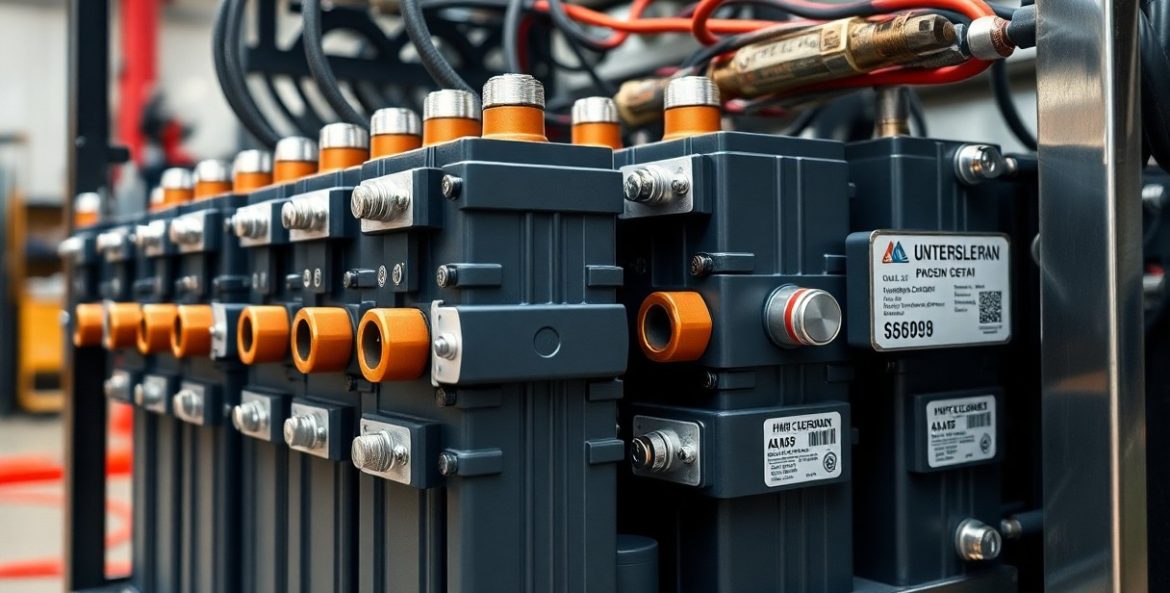
Many systems that face rapid power swings depend on high power cells; you must understand high discharge rates, thermal management and cell impedance to prevent thermal runaway while exploiting high power density for burst performance. You will learn selection criteria, testing protocols and pack-level strategies so your designs deliver reliable, efficient power under dynamic loads without compromising safety.
Types of High Power Battery Cells
| Li‑ion (LFP) | High power pulse capability, ~90-120 Wh/kg energy, >3C continuous, >2000-5000 cycles at 80% DoD, excellent thermal stability |
| Li‑ion (NMC/NCA power variants) | Higher energy 150-250 Wh/kg, optimized for 5-20C power cells, tradeoff between energy and cycle life, used in EVs and power tools |
| Nickel‑based (NiMH) | Moderate energy 60-120 Wh/kg, good high‑rate discharge, simpler thermal management than some li‑ion, higher self‑discharge than li‑ion |
| Nickel‑based (NiCd) | Rugged under extreme temps, very high discharge rates, long service life in harsh environments but contains toxic cadmium |
| Solid‑state | Emerging tech with potential 300-500 Wh/kg and improved safety, current limits include interface resistance and manufacturing scale |
- High Power Battery Cells
- dynamic load
- Lithium‑ion
- Nickel‑based
- Solid‑state
Lithium-ion Batteries
You’ll find that for dynamic load applications the most common choices are purpose‑built Lithium‑ion cells that prioritize low internal resistance and high C‑rate capability; power‑focused formulations routinely deliver continuous discharge rates in the 3-20C range and pulse rates well above 30C. Manufacturers specifically design electrode porosity, particle size and binder chemistry to lower polarization, so you can sustain sudden current draws for traction motors, UPS systems, and aerospace actuators without excessive voltage sag.
Performance examples help: LFP cells offer ~90-120 Wh/kg with >2000 cycles at 80% DoD and superior thermal tolerance, while power‑tuned NMC/NCA cells reach 150-250 Wh/kg but require tighter thermal control and BMS tuning to avoid accelerated degradation; you should expect BMS strategies (cell balancing, pulse current profiling) to be decisive in achieving both power and longevity.
Nickel-based Batteries
When you need robustness across temperature extremes and aggressive pulse capability, Nickel‑based chemistries remain relevant: NiMH delivers decent high‑rate discharge with energy densities around 60-120 Wh/kg and simpler charge algorithms, while NiCd tolerates deep discharge and very high currents with proven reliability in aerospace and industrial starters. Charging control matters – delta‑V and temperature compensation help you extract long cycle life without overcharging.
In practical deployment, you’ll see NiMH used in hybrid systems and niche power tools where ruggedness and tolerance to abuse outweigh peak energy needs; NiCd still appears in legacy systems requiring cold‑start capability and resistance to mechanical shock, but its use is limited by environmental rules regarding cadmium.
For field service and end‑of‑life decisions you must weigh regulatory handling and recycling complexity against the operational benefits of nickel chemistries, and plan logistics accordingly with appropriate disposal and recycling pathways to mitigate the toxic cadmium risk.
Solid-state Batteries
You can expect solid‑state cells to radically shift the tradeoffs as manufacturing matures: replacing liquid electrolytes with solid conductors reduces flammability and offers potential for much higher volumetric energy while allowing thinner cell designs that favor high power delivery. Current prototypes report ionic conductivities and power densities that approach practical application levels, and several OEM pilots target fast charging at multi‑C rates with improved cycle retention.
Adoption hurdles remain tangible: you’ll face interface stability, dendrite suppression at high currents, and scaling costs that limit short‑term availability to specialized applications; however, research shows thin solid electrolytes coupled with protective interlayers can enable >10C pulses in lab cells, pointing to clear performance gains for dynamic loads once production challenges are solved.
From an integration perspective you should budget for different thermal management and cell packaging approaches, because while solid electrolytes lower flammability they also change heat conduction paths and mechanical stress responses inside modules.
Recognizing the specific power, cycle life, thermal and regulatory tradeoffs among High Power Battery Cells helps you match cell chemistry and form factor to your dynamic load application.
Factors Impacting Performance
When you assess high power battery cells for dynamic loads, focus on how the cell’s electrical response, thermal behavior, and degradation mechanisms interact under short, intense bursts and varying duty cycles. You must quantify peak versus continuous current, thermal limits, and long-term fade to size your pack and specify cooling, protection, and BMS algorithms. Dynamic Load profiles often expose weaknesses that steady-state tests miss, so include stress cases such as 10-30C bursts, 0.5-5 second pulses, and repeated start-stop sequences in your validation plan.
- Load Characteristics – peak current, pulse duration, duty cycle
- Temperature Conditions – operating range, gradients, cooling approach
- Cycle Life – DOD, C-rate, calendar aging
- Internal Resistance – milliohm-level losses, I2R heating
- Battery Management – SOC windowing, cell balancing, safety limits
Load Characteristics
You should separate peak and continuous metrics: a 10 Ah high-power cell may tolerate a 100 A peak (10C) for 2-5 seconds with manageable voltage sag, but sustaining 10C continuously will force thermal throttling and accelerated fade. C-rate drives both instantaneous power and heat generation – for dynamic applications, specify both maximum pulse C and allowable average C over representative duty cycles.
Duty cycle matters more than single pulses: repeated 30C bursts at 1 Hz will raise cell temperature rapidly and cause capacity loss sooner than occasional spikes. You must model pulse width, repetition rate, and SOC at pulse onset to predict voltage sag, heating, and required safety margins; for example, limiting SOC to 60-80% before high-current events reduces internal heating and extends usable life.
Temperature Conditions
Cold temperatures increase internal resistance and reduce available capacity – expect roughly a 20-40% capacity drop at −20°C compared with 25°C for many lithium chemistries, and slower charge acceptance below 0°C. Conversely, running cells above 45°C accelerates side reactions: aging rates often double for every 10°C rise, so high-temperature operation at high SOC will shorten life substantially. Apply thermal management to keep cells within a 0-45°C window for most high-power designs.
Uneven temperatures across a pack create cell imbalance and localized over-stress; aim to keep inter-cell temperature differentials below 5°C during dynamic events. Liquid cooling or direct cooling plates are common in systems where you expect sustained high average power or frequent high-energy pulses, and you should instrument packs with thermistors at representative cells to feed the BMS thermal control loop.
Temperature: Effects and Recommendations
| Condition | Effect / Recommendation |
|---|---|
| −20°C | ~20-40% capacity loss; restrict high-current discharge and avoid charging until warmed |
| 0-25°C | Optimal compromise for performance and longevity; full power available with active cooling |
| 25-45°C | Increased power acceptance but faster chemical aging; minimize time at high SOC |
| >45°C | Rapid calendar and cycle aging; implement shutdown or derating to protect cells |
In fast-charging EVs and power tools you will see active cooling limits designed to keep maximum cell temperature below 45°C and pack delta-T under 5°C; for example, many packs target a 15-30°C coolant temperature and allow short pulses that raise cell surface temperature by no more than 10°C. Applying this approach, you reduce the probability of thermal runaway during repeated high-power events and preserve capacity over thousands of cycles.
Temperature: Diagnostics and Mitigation
| Symptom | Mitigation |
|---|---|
| High self-heating during pulses | Lower pulse C, improve cooling, or prebias cell SOC before events |
| Large pack ΔT | Redistribute cooling, add thermal spreaders, tighten cell matching |
| Rapid capacity fade at high temp | Limit max SOC, implement active thermal cutoffs, reduce average C-rate |
Cycle Life
Your cycle life projections must tie DOD, C-rate, and temperature together: Depth of Discharge (DOD) dominates cycle count – reducing DOD from 100% to 50% can more than double usable cycles for many chemistries. As a rule of thumb, LFP cells often exceed 2,000-5,000 cycles at moderate DOD, while NMC cells typically reach 1,000-2,000 cycles under aggressive power use; high C-rate cycling and elevated temperatures will reduce these figures significantly.
To quantify trade-offs, perform cycle testing at representative temperatures and pulse profiles: run a 1C charge/discharge baseline at 25°C, then replicate your dynamic pulses at target SOC windows to measure real-world fade. Manage state of charge windows and avoid prolonged 100% SOC at high temperature to slow capacity loss and maintain power capability over the expected service life.
When you control DOD, average C-rate, and cell temperature together, you preserve both peak power and long-term capacity; The outcome is you balance peak power, thermal control, and DOD to meet both performance and longevity targets.
Tips for Selecting the Right Battery Cell
Optimize your selection by focusing on measurable metrics: C-rate, internal resistance (mΩ), continuous vs. pulse discharge, operating temperature range, and expected cycle life. Compare cells with published datasheets showing pulse tests (e.g., 10 s, 30 s, 1 min) because a cell that delivers a steady 3C continuous rate may still suffer >10% voltage sag under a 10C pulse; internal resistance above ~10 mΩ typically produces significant heat at high current and is a common failure mode under dynamic loads.
- Pulse power (peak kW per kg or per cell)
- Continuous power (W/kg and thermal rise at rated current)
- Cycle life at your expected Depth of Discharge (DoD)
- Operating temperature window and thermal management needs
- Form factor (cylindrical/prismatic/pouch) and mechanical robustness
Balance energy and power: if your design needs >5C pulse for seconds, prefer cells specified for high pulse performance even if energy density drops (e.g., some LFP and modified graphite/NMC blends sacrifice Wh/kg to hit >10C pulses). Also validate the cell’s datasheet with independent test reports or vendor-supplied pulse profiles at your pack-level voltage to confirm that pack BMS, wiring, and thermal paths will support the rated performance.
Analyze Application Requirements
Quantify load profiles: generate a histogram of expected currents (average, RMS, and peak), duty cycle, and duration of pulses-example: an industrial inverter that draws 200 A for 5 s every 60 s requires different cell choices than an EV with 30 s burst events. Use those numbers to set target C-rate and thermal dissipation per cell; if peaks exceed 8-10C for more than a few seconds, design in active cooling and cells rated for high pulse loads.
Account for environmental extremes: if your system operates between -20°C and +60°C, choose chemistries and cell formats that keep internal resistance low at cold temperature (some cells double resistance below 0°C). Also define acceptable end-of-life metrics-e.g., maintain ≥70% capacity after 2000 cycles for stationary backup vs. ≥2000 cycles for repeat high-power applications-and size pack redundancy accordingly.
Consider Chemistry and Configuration
Match chemistry to duty: LFP typically offers >2000 cycles at moderate DoD, wide thermal stability, and predictable voltage during pulses but lower energy density (~90-120 Wh/kg); high-Ni NMC/NCA gives higher energy (~150-250 Wh/kg) but may have higher cell impedance growth and shorter high-power cycle life. For pure pulse applications you might accept lower Wh/kg to get higher C-rate and lower heating.
Choose form factor based on thermal path and mechanical stresses: cylindrical cells (e.g., 21700) often manage heat better in high-discharge scenarios and can deliver >3-10C depending on design, while pouch cells can be tailored for low internal resistance but require more robust mechanical containment and compression to avoid swelling under repeated pulses.
When in doubt, test a candidate cell in your exact configuration (busbar layout, interconnect resistance, and cooling) using the real-world pulse profile; small differences in pack wiring can change cell surface temperature by 10-20°C under high pulse loads, which materially affects cycle life and safety.
Evaluate Manufacturer Reputation
Vet suppliers by looking for long-term test data, transparent aging reports, and third-party validation (e.g., independent labs or industry certifications). Prioritize vendors who publish pulse curves, impedance growth over cycles, and failure-mode analyses; a manufacturer that provides module-level thermal models and cell-level abuse test results gives you better risk visibility for dynamic loads.
Inspect supply-chain stability and support: confirm capacity forecasts, warranty terms tied to cycle life at specified DoD, and availability of matched lots for production runs-mismatched lots can introduce variance in internal resistance and DCIR that hurt pack balancing. Also check for documented thermal runaway thresholds (>150-200°C onset for many Li‑ion chemistries) and what the supplier does to mitigate that risk in cell design.
Request sample batches and run accelerated pulse/thermal cycling to reproduce your load; track impedance, temperature rise, and capacity fade over at least 500 cycles before committing to a production order. Thou, you should include contractual clauses for lot traceability and remediation if cells fail to meet the agreed pulse-performance metrics.
Step-by-Step Guide for Implementation
| Phase | Key Actions |
|---|---|
| Initial Assessment | Quantify worst-case power and energy demands, duty cycle, ambient/operating temperatures, and required lifecycle (cycles/year). Translate system-level power into cell-level current using pack voltage and series/parallel count; include safety margins (typically +20-30%). |
| Sourcing the Right Technology | Select chemistry and cell format with appropriate continuous and pulse C-rates, low ESR (mΩ range), and manufacturer test data; request sample cells for pulse, calendar, and abuse tests; verify certifications (IEC/UL where applicable). |
| Installation and Testing | Design mechanical retention, thermal path, busbars and fusing sized for peak currents (estimate copper cross-section by current density), integrate a BMS with appropriate thresholds, and run defined acceptance tests (pulse, thermal, cycle-life). |
Initial Assessment
You must start by converting the system-level transient requirement into cell-level numbers: for example, a 10 kW peak at 48 V is ~208 A at pack level; if your cell string nominal voltage is 3.2 V, that implies per-cell currents depending on series/parallel topology – calculate both continuous and pulse currents and size the parallel count so each cell sees a safe C-rate. Target a design margin of +20-30% above measured peaks to account for aging, tolerance and unexpected loads.
Next, log real-world behavior with high-speed data capture (1 kHz or at least 100 Hz for fast transients) and thermal imaging during representative events; measure voltage sag, current spikes, and temperature rise. Use those measured values to set BMS trip points, and note that some chemistries (for example, LFP with nominal 3.2 V vs NMC at ~3.6-3.7 V) tolerate high pulse currents differently – high internal resistance or inadequate cooling increases risk of thermal runaway, so keep cell temps below 45°C where possible and never let steady-state exceed 60°C.
Sourcing the Right Technology
Prioritize cells specified for pulse performance: look for datasheet pulse C-rates (e.g., continuous 3-10C, pulse 20-30C for 10 s) and ESR values under 10-20 mΩ depending on capacity. For a 5 Ah cell, a 10C continuous rating equates to 50 A and a 30C short pulse gives 150 A for bursts – use those figures when determining parallel strings. Ask suppliers for internal resistance vs SOC curves, thermal resistance, and cycle-life at the intended DoD; prefer vendors who provide IEC/UL test reports and sample traceability.
Validate supplier claims with your own tests: request 50-100 sample cells and run a pulse protocol (e.g., ten 10 s pulses at target pulse current with 60 s rest, repeated 10 times) while logging voltage sag and ΔT. Use acceptance criteria such as capacity retention >95% after initial qualification cycles and ESR growth <20% during sample testing before scaling to production buys.
Procurement details matter: confirm minimum order quantities and lead times (custom high-power cells commonly run 12-20 weeks), negotiate warranty terms tied to cycle-life guarantees, and include a clause requiring batch test certificates and pre-shipment samples so you can repeat critical pulse and abuse tests on arrival.
Installation and Testing
Mechanically mount cells to ensure firm contact, controlled compression (for pouch/prismatic cells), and a direct thermal path to the cooling system; size busbars and connectors to handle peak currents – as a rule of thumb, plan for copper cross-sections that support your peak current at 3-5 A/mm² (so a 300-400 A peak typically needs on the order of 80-130 mm² depending on cooling and duty). Implement a BMS with overcurrent, overtemp, and SOC protections; set overcurrent trip points at ~120-150% of expected peak and thermal cutoffs matching cell limits (e.g., stop discharge if cell >60°C).
Execute an acceptance test sequence: an initial capacity test at 0.2-0.5C, a pulse-discharge protocol matching real-world transients (e.g., 10 s pulse at rated pulse current, rest, repeat), and an accelerated cycle-life test (for example 1C cycles to the target DoD for 200-500 cycles) to validate degradation rates. Perform all abuse tests inside proper containment with remote monitoring and fire suppression in place because shorts and thermal events can escalate rapidly.
For commissioning, calibrate SOC estimation (use coulomb counting with periodic voltage/SOC reconciliation), enable cell balancing thresholds (~10-20 mV differential), log field events for at least the first 1,000 duty cycles, and plan firmware update workflows – acceptance criteria should include voltage sag within spec under pulse, ΔT limits per pulse, and no unsafe cell voltages during combined charge/discharge events.
Pros and Cons of High Power Battery Cells
| Pros | Cons |
|---|---|
| Very high power density – supports short pulses >10C and continuous rates often >3C | Lower energy density (typically ~90-140 Wh/kg for high‑power LFP vs 180-260 Wh/kg for energy cells) |
| Low internal resistance (single‑digit to low double‑digit mΩ) yields minimal voltage sag under load | Increased thermal management requirements; must dissipate rapid heat during repeated pulses |
| Fast charge acceptance (1C-5C common; some chemistries tolerate higher short bursts) | Higher cost per Wh compared with energy‑optimized cells |
| Long cycle life for some chemistries (e.g., LFP often >2,000 cycles at moderate DoD) | Faster calendar and cycle aging if operated frequently at high DoD and elevated temperature |
| Excellent for applications with frequent power transients (regenerative braking, UPS, power tools) | Requires sophisticated BMS for cell balancing, current limiting and safety protections |
| Scalable formats available (cylindrical, prismatic, pouch) for different packaging and cooling strategies | Safety hazards if abused – overcurrent or poor cooling can lead to thermal runaway in some chemistries |
| Predictable voltage response makes state estimation and control simpler under dynamic loads | Heavier and larger for the same stored energy when compared to high‑energy cells |
| Proven deployments in heavy‑duty and industrial systems (e.g., grid storage inverters, electric forklifts) | May need cell matching and periodic maintenance in high‑duty installations, adding system complexity |
Advantages
You get immediate power delivery with minimal voltage sag because high power cells are engineered for very low internal resistance – single‑digit to low‑double‑digit milliohms is typical for many cylindrical and prismatic high‑power designs. In practice that means you can draw short bursts at >10C (seconds) and sustain continuous discharge at >3C in many LFP or high‑power NMC variants, making them ideal for regenerative braking in EVs, UPS systems that must ride through mains disturbances, and industrial tools that demand high torque on startup.
Your system benefits from faster recharge windows and long cycle life when you select the right chemistry and operating window. For example, properly managed LFP high‑power cells often provide >2,000 cycles at moderate depth‑of‑discharge and can be recharged at 1-3C repeatedly without catastrophic capacity loss, enabling designs that prioritize duty‑cycle performance over absolute energy density.
Disadvantages
You sacrifice stored energy per kilogram and per liter when you prioritize power: high‑power cells commonly fall in the ~90-140 Wh/kg range compared with energy‑optimized NMC cells that can reach 200-260 Wh/kg. That means your pack will be larger and heavier for the same runtime, which impacts vehicle range or portable runtime unless you accept different system tradeoffs.
Your design must address thermal and safety challenges more aggressively. Repeated high current pulses generate rapid internal heating, so you need effective cooling, current‑limiting, and a robust BMS; otherwise you expose the pack to accelerated ageing or, in the worst case, thermal runaway with potential for fire – especially if cells are over‑discharged, overcharged, or physically damaged.
To mitigate these disadvantages you should implement conservative derating, active cell balancing, real‑time temperature monitoring, and carefully specify cell matching during assembly. In many fielded cases (for example, commercial EV fleets and industrial lift trucks) operators derate peak discharge by 10-30% and use forced liquid or plate cooling to keep junction temperatures below 45°C, which materially extends life and reduces the probability of safety incidents.
To wrap up
Conclusively, high-power battery cells give you the ability to meet demanding dynamic load profiles by delivering high C‑rate performance, low internal resistance, and rapid recovery under pulse conditions; to leverage these attributes effectively you must prioritize appropriate cell chemistry, cell form factor, and rigorous characterization so that your system meets power, cycle life, and safety requirements. You should pair cell selection with thoughtful pack architecture, robust thermal management, and an adaptive battery management system to control state of charge, balance cells, and mitigate degradation under repeated high‑power events.
To maximize reliability and total cost of ownership, you should design with margin for peak currents, implement active cooling and real‑time monitoring, and validate performance through representative cycling and abuse testing; doing so ensures your application achieves predictable power delivery, extended service life, and safe operation while allowing you to scale the solution as your power demands evolve.